

Why Ketosis Diets Will Fail: The Paleo and Keto Manifesto

The most disturbing trend in wellness these days is that most people have no idea what to eat.
When choices were fewer, 100 years ago, how to eat for good health was much clearer. Americans have been so steeped in diet fads that they’re now thoroughly confused about food.
What You Need to Know About Ketosis
In this article:
- Changing Diets and Fads
- New Fad: Low-Carb Ketogenic Diet
- Ketogenic Diet Skeptic
- The Diet Industry and Their New Fads
- The Calorie and Carbohydrate Restrictions
- Fasting for the Keto Diet
- Is a Low Carbohydrate Diet Good for You?
- The Vegan Diet
- Why the Keto Diet is Doomed
- Keto Quotes | Experts Challenge Ketogenic Myths
- Gerson Therapy | Nutritional Regimen for Cancer
- Reconsider Diet Fad-Hopping
- Diets for a Longer Life
Changing Diets and Fads
Recently, I mentioned to a millennial that when I was a kid, we didn’t have bottled water, and she said, with a shocked look on her face, “Then how did you get any water to drink?!”
Programmed Food Cults
Similarly, modern people think that in order to eat, you have to follow one of the diet fads. A strange feature of life in 2018 is the need to align with a programmed “food cult,” as I call them.
Thanks to some strange cultural and market forces I do not believe to be particularly helpful to our overall health, food has become much like religion.
Many don’t know how to eat outside of what their food tribe, congregation, or pastor tells them, and every few years, many people convert to the new cult.
“I’m Paleo,” people say—as if identifying with a coat of arms.
I’ve been asked countless times, “What diet do you eat?”
New Fad: Low-Carb Ketogenic Diet
Several years ago, I wrote a detailed blog post on why the Paleo Diet was a fad, wouldn’t last, and why it would eventually be supplanted by a new fad aggrandizing fat rather than protein.
Paleo followers wrote murderous emails and comments.
Now those same people, it seems, are rabidly promoting the Ketogenic Diet.
The Paleo Diet
I felt I was fair to the Paleo Diet. We were friends, to a point. At least the Paleo cult banned processed food, even while glorifying animal flesh foods and strangely vilifying entire classes of foods that hominids and humans have eaten for 3.4 million years:
Now, it seems, we’ve gone from the proverbial frying pan to the fire.
New Golden Child: High-Fat Diet
As I predicted would happen from many live stages on my lecture tours earlier in this decade, the new “golden child” in the diet industry is, predictably, fats.
It turns out over-eating protein saved us from exactly nothing. Following historical trends, then, a new diet fad must be born to instruct the Western world how to eat.
To clarify, fat isn’t really a “new” golden child. It’s a recycled golden child since Atkins already did it, and the Ketogenic Diet isn’t all that different from the famed Atkins Diet that many published studies showed was not beneficial to our health.
Ketogenic Diet Skeptic
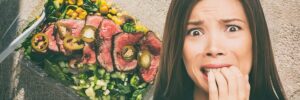
Eating mostly meat can lead to many health and wellness issues
The least profitable foods—the ones that grow in the ground and on trees—are the least likely to get any significant attention from the food cults.
Paleo and Ketogenic Diet Failure
The most profitable foods (those in packages, made with “proprietary processes” and stamped with “Paleo Friendly” or “Keto Approved”) also have the lowest vibrational energy, the lowest micronutrient levels, the lowest fiber, and the lowest ability to prevent disease.
I’ve invited some of my friends—medical doctors, researchers, and authors who have watched the diet industry’s chokehold on the American diet with growing alarm—to weigh in on the latest fad now often called “Keto.” Their quotes are included in this blog post.
The Inevitable Keto Failure
I believe this latest ketosis diet will be chased off the stage by research that was already published at the end of the reign of the Atkins diet fad, along with additional research that's sure to come, all showing the overwhelming negative health effects of overeating animal products and repeatedly manipulating the body into a state of “ketosis.”
I also predict that five years from now, the same people advocating the “ketogenic diet” currently will be onto a new fad, promoting the new golden child instead.
The Diet Industry and Their New Fads
The diet industry is constantly changing and selling new ways to lose weight or be healthy
Here’s the thing: the diet industry is big business. Tens of billions of dollars a year. It’s in collusion with the packaged food industry.
These wealthy industries aren’t going anywhere, and they are a treadmill, needing a new fad every few years so they can replace “Paleo Approved” products with “Keto Approved” products and create the false need for more consumption.
Why Are There So Many Diet Plans?
The diet authors and processed food industries pivot, pose, and preen based on whatever is popular, not what’s actually good for human health.
Elimination Diets
The cabbage soup diet. The green smoothies diet. The werewolf (lunar) diet. The grapefruit diet. The tapeworm diet. The blood type diet. The apple cider vinegar diet. The cotton ball diet. The wheat-elimination diet. The alkaline diet.
The authors of some of these books are friends of mine. Good people.
And I’m not innocent. I wrote The Green Smoothies Diet, after all. (I threw that in the list, to be fair. Someone would have brought it up.) I’m willing to put my own book on the pileup to make an important point.
The Green Smoothies Diet
As a side note, though, may I share why I wrote that book? What I actually wrote wasn’t a “diet” at all. It was about how combining lots of superfoods and greens in a blender is an answer to our nutrient insufficiency, in an age where we want all our food to be “fast.” But the publisher insisted on naming it The Green Smoothies Diet. "Write whatever you want," they said, "but we WILL call it a 'diet,' and if you refuse, we’ll find another author to write it." That book has sold more copies than my other 14 books combined (which demonstrates the point: diet books sell).
The Big Business of Diet Fads
So, aggrandizing one food class, or one food, as if it has magical properties that will save everyone from every disease, is good for business.
Vilifying a class of foods, and teaching people how to avoid them, is big business, too, and fundamental to the diet industry.
To do either of these things, you generally have to cherry-pick data, ignoring a great deal of evidence to the contrary.
The Diet isn’t for Everyone
I play tennis competitively, and on the court recently, one of my tennis teammates was doubled over. It was only 9 am, so I asked:
“You seem really tired, what’s wrong?”
She said, “I’m on the ketogenic diet, and I’m exhausted. My husband just got really ‘shredded’ on it, but I don’t feel good at all.”
The Calorie and Carbohydrate Restrictions
Cutting carbs from your diet is not a healthy or sustainable way to reach your health goals
You can lose weight in countless ways. Atkins, Ketogenic, you name it. They’re banning whole categories of foods, and they’ve all been shown, in studies tracking what the dieter actually eats, to be clever forms of calorie restriction.
(Many evaluations of the popular diets since Atkins have shown that since no one wants to eat unlimited protein or unlimited fats, dieters end up eating fewer calories.)
Low-Carb Diet
But the human body has lived on carbohydrates—70 percent carbohydrates, on average—since the dawn of time. It’s the food your liver requires.
Carbohydrates aren’t bad, just by virtue of being carbohydrates.
The talk about “carbs” is virtually meaningless, since most foods are high in carbohydrates.
Different Types of Carbohydrate Intake
You’ve got simple and complex carbs, whole-food carbs and refined-food carbs. You’ve got “carb” foods full of important soluble or insoluble fiber—or both.
You’ve got wonderful “carb” foods that are extremely high in micronutrients (hundreds of different vitamins, minerals, enzymes, phytonutrients)—and others that are worthless, and harmful, with virtually no micronutrients.
Shortcomings of Fat and Protein Intake-Only Diets
It should be noted that “proteins” and “fats,” though they have important properties needed for health, are almost always foods with little or no dietary fiber and very low micronutrient density as well. Since our gastrointestinal cancers epidemic is largely due to lack of fiber and micronutrients in the “standard American diet,” eliminating carbs seems a terrible idea for cancer prevention and treatment, especially when it comes to colorectal cancers.
Making ALL Carbs Look Bad
Truly, lumping all the foods containing “carbohydrate” into a single class makes little sense.
Because even if we narrow it down and look at two foods high in simple sugars as an example, a bagel and a banana are very different foods.
The Bagel and the Banana
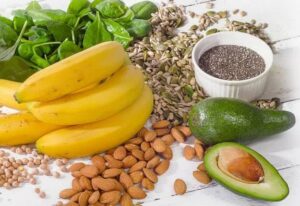
Bananas and bagels are both 'carbs'
The bagel is Roundup-sprayed (twice!), stripped of fiber and lacking any real micronutrients, gluey, and will slow your digestion. It has nothing to offer you besides a gluten reaction and a blood-sugar and insulin spike.
A banana, though, has soluble fiber and dozens of nutrients, including potassium and magnesium. It is a high-vibration food that contributes to longevity.
Calling both of these foods “carbs” is misleading—virtually useless, in fact.
The Danger of Restricting Carbs
Eliminating or severely restricting carbohydrates from the diet, as both the Paleo and Keto diets do, is especially problematic since foods considered “carbs” are the foods highest in fiber and micronutrients, which are linked, in thousands of studies, to reduced disease risk.
Fasting for the Keto Diet

Fasting is actually quite healthy for you; ketogenic fasting, however, is not
Fasting is part of the ketogenic diet, and fasting is a great idea.
However, to put the logical fallacy to rest: fasting is part of the ketogenic diet, and fasting is good for you, but that does not mean the ketogenic diet as a whole is a healthy, sustainable way to live or even a good way to lose weight.
Researched Benefits of Fasting
Fasting is well-researched and time-tested. Many cultures of the world have engaged in periods of not eating for physical purification as well as spiritual benefits, and many research studies show fasting to be beneficial for human health.
[Related Article: Will a Fasting Diet Give You The Results You Want?]
Fasting Problem with Ketosis
The benefits of fasting aren’t necessarily related to the state of “ketosis,” where starvation supposedly forces fat burn. (See Dr. Alan Christianson’s quote below about whether “ketosis” is even what the Keto diet claims it is.)
I’m far more interested in the induced state of autophagy from a 12-hour fast, or for a longer fast lasting several days.
I’ve water-fasted (no food, only water) for stretches of 7 days, 9 days, and 12 days in the past two years.
Why? Because in autophagy, when the body has no food, it scavenges aberrant cells and sends immune function into high gear, gobbling up cancer cells, yeast, mold, byproducts of metabolism—generally and specifically cleaning house.
Fasting for a Long Life
I believe fasting is one of the most powerful things you can do for longevity and to avoid chronic disease. Thomas Lodi, M.D., a Columbia-trained medical doctor, presents all his cancer patients with information on water fasting and tells them it’s the single most powerful thing they can do in their treatment.
Why Fasting Doesn’t Work with Keto
Compare that to the ketogenic diet plan, where you may be advised to drink acidic coffee full of butter alongside a plate of bacon. This is unsustainable, unpalatable, and artery-clogging, as well as devastatingly low in chlorophyll, oxygen, raw enzymes, phytonutrients, vitamins, and minerals.
Is a Low Carbohydrate Diet Good For You?
Let’s take a look at some of the myths around the diet industry’s theory that carbs make you tired, sick, and fat.
Ari Whitten and Wade Smith, MD’s book, The Low Carb Myth, says this:
“The Carbohydrate Theory of Obesity [an attempt to blame fat gain on carbohydrates and sugars] is based on numerous scientific inaccuracies, omissions of data, and countless instances of data cherry-picking.”
The Paleo Diet Do’s and Don'ts
One study showed the Paleo Diet to be most essentially defined, by its followers, as eating more vegetables. If that’s the case, we’re all friends here.
The Paleo Diet does ban white flour, processed sugar, and chemicals in your food.
Unfortunately, most people embracing it eat even more animal products (protein and fat) than the average American does, and that is an important note in pointing out the problems with the Paleo diet.
Banning Legumes, Fruits, and Grains
Legumes, fruits, and unprocessed grains have been part of healthy diets worldwide since the dawn of man 3.4 million years ago, as shown by recent research on early hominids at the University of Utah.
If you don’t want to eat legumes and whole grains, or if you’re reactive to legumes due to a damaged microbiome—fine, you can probably also stay healthy eating really clean forms of animal protein.
But keep in mind that it generally takes 20 pounds of plants to bring 1 pound of animal food to market.
The Vegan Diet
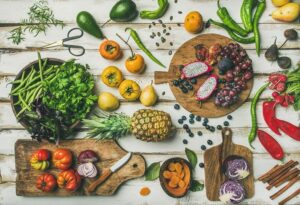
A vegan diet provides a number of health benefits many are searching for in other diets
If vegetarians and vegans make you angry (both Paleo and Keto diet proponents tend to be rather anti-vegan), check your thinking. Vegans may be dogmatic, and you may not like their style in promoting their diet, but their diet is using 5 percent of the Earth’s resources to sustain themselves, drastically less than someone eating the 30 to 60 percent animal proteins of the Paleo and Keto diets.
Less Damage to the Planet
Healthy vegans, the ones who eat whole foods as opposed to junk food, are living with far less impact on the planet.
Maybe you should thank a vegetarian today, even if you’re personally choosing to eat meat. The direction we’re driving the diet bus these days, with so many packaged foods and animal foods, isn’t sustainable ecologically.
Why The Keto Diet is Doomed

The ketogenic diet is not sustainable, for you or the environment
We can all be friends, and I love the Paleo Diet for getting people off processed food.
But Paleo’s new, sexy sibling, the Ketogenic Diet? It’s just bad news. It’s lipstick on a pig.
(Let the hate mail begin.)
And the worst of the bad are these people selling toxic jugs of “ketones.” Please don’t drink this plastic, petroleum-product garbage. It’s pure marketing, it’s not food, and it’s not good for you.
Scientific Warnings Against Ketosis
The Ketogenic Diet will eventually be run out of town by scientific studies of long-term results, just like all the others have. (Eat Right for Your Blood Type, Atkins, and Paleo come to mind.)
And in fact, the Ketogenic diet is so similar to Atkins that many experts have written entire books warning America that the excesses of animal products and the strange “ketones” phenomenon represent a serious threat to public health, based on volumes of published research.
Think of the Long-Term Effects
Use your critical thinking skills rather than sign on as a human guinea pig every time the diet and food manufacturing industries put a new spin on a tired, old debunked concept in front of you.
We already know what people eat to lose weight and keep it off. High-fat, bacon-and-eggs meals with coffee? That’s not it.
No Health Benefits
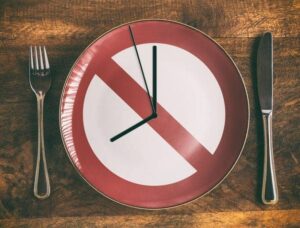
The Keto marketers have brought one of the worst, but most popular, diets in the history of diets (Atkins!), back to life. With a fasting twist.
Cancer survivor and nutrition researcher Chris Wark says, “The ketogenic diet is like fasting, only with none of the health benefits.”
With the ketogenic diet’s new obsession with “fasting,” diet marketers have taken something good and made it into something commercial and less-than-helpful.
Just Another Atkins Diet
In effect, Keto marketers have brought Atkins back from the dead, even though it's one of the worst diets in the history of diets.
The twist? It’s still bacon and coffee for breakfast, but this time, there's fasting!
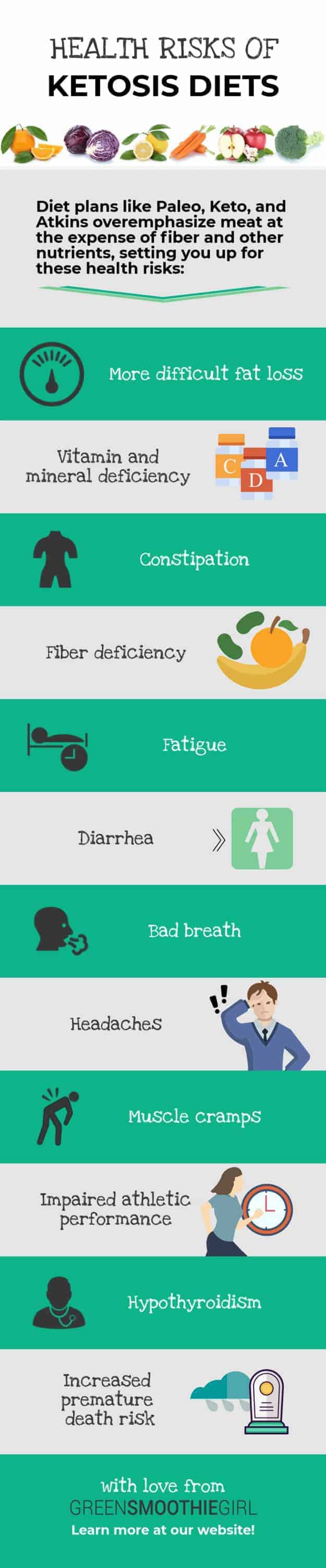
Haven’t we evolved past this? If you eat for ketosis, plan to have constipation, bad breath, yo-yo weight loss and gain, and your liver breaking down, just like happened for millions of Atkins sufferers and Dr. Robert Atkins himself, who suffered from heart disease.
We already learned with the Atkins Diet that bouncing in and out of ketosis is a great way to end up heavier than you started, possibly with a new diabetes diagnosis.
Keto Quotes | Experts Challenge Ketogenic Myths
Ari Whitten and Wade Smith | The Low-Carb Myth
Ari Whitten and Wade Smith, MD, said, in their book, The Low-Carb Myth:
“….the notion of everyone eating diets of essentially nothing but fat and protein with only a tiny amount of carbohydrate as a widespread initiative to combat obesity is laughable, since any dietary pattern so extreme as to jettison an entire macronutrient (and simultaneously limit another one) is simply unsustainable for the majority of people.”
Harry Massey | Filmmaker
My friend, filmmaker Harry Massey, was convinced by a mutual friend of ours, one of the diet book authors, to try the new fad, and this is what he told me:
“I went on the ketogenic diet, I felt like crap, and three months later I was diabetic.”
I also did an interview with him on the Vibe Podcast, Ep.31: The Human Body Field with Harry Massey for more Harry Massey wisdom.
Dr. Joel Fuhrman | NYT Bestselling Author
Dr. Joel Fuhrman, MD, 4-time NYT bestselling author, joined me for Episode 37 of the Vibe Podcast, "Eat to Live," and shared these thoughts additionally with me about the ketogenic diet:
"There are many variations of the ketogenic diet, and some are more dangerous than others. One thing known without question is that the long-term safety of these diets is unknown, because studies would have to follow thousands of people for decades into their 70s and 80s to truly ascertain the true risks.W hat we do know with certainty from such long-term studies is that as the proportion of products from animal products increase in the diet, so does the death rate from cancer and heart disease.
"In other words, the quality and long-term safety of a diet can be determined by the ratio of 'produce' calories to 'animal product' calories. We also know that diets richer in antioxidants and phytochemicals—and with a broad variety of such anti-cancer immune-supporting substances—are critical to prevent later-life cancers.
"The ketogenic diet generally uses high amounts of oils, which do not contain a significant micronutrient content as a source of calories, thus diluting the micronutrient density of the diet.
"In summary, it is not the diet best designed to push the envelope of human longevity, though a ketogenic diet, if well designed, may not be as dangerous as the highly processed-food SAD diet, which contains dangerous ingredients such as white flour, sugar, fried foods, soda and junk food."
—Joel Fuhrman, MD
Dr. Alan Christianson | NYT Bestselling Author
I spoke at length with Dr. Alan Christianson, NMD, NYT bestselling author, in Episode 50 and Episode 121 of the Vibe Podcast. Here, he challenges the entire foundation of the diet:
“The ketogenic diet is a legitimate tool for helping reduce seizures among epileptic children who did not respond to medication. We may learn more in the coming years about benefits to other conditions, but most think of it as an easy path to weight loss.
“The underlying assumption people make is that the ketogenic diet makes them better at burning fat. Sadly, it does the exact opposite, and the confusion comes about from using the phrase 'burning fat' in two different contexts. Using fat for fuel is called beta-oxidation. Breaking down body fat is called lipolysis. Ketosis is the state in which your liver cannot burn fat for fuel. It can burn fat for fuel only when carbohydrate and protein are also present.
“A ketogenic diet only leads to lipolysis when it contains fewer calories than is needed. This is true of any diet. When a ketogenic diet has more calories than is needed, the extra dietary fat that is initially converted to ketones gets turned into triglycerides and stored as body fat.
“In a controlled human study comparing a ketogenic diet against a high carb, high-sugar diet with the same number of calories, the high-carb diet led to more fat loss than the ketogenic diet.
“Besides the lack of efficacy for weight loss, the ketogenic diet has risks to consider for those seeking to improve their health. The evidence supporting the benefits of dietary fiber, vitamins, and minerals, is undeniable. The ketogenic diet is devoid of fiber and low in vitamins and minerals.
“Along with a myriad of side effects like fatigue, diarrhea, muscle cramps, and headaches, people on ketogenic diets also run the risks of:
- hypothyroidism
- impaired athletic performance
“We may find more medical applications of the ketogenic diet and more ways to mitigate some of the inherent risks and deficiencies it creates. However, ketones are not the 'preferred' source of fuel for the human body, nor are they effective hacks for weight loss.”
—Alan Christianson, NMD
I collected more expert opinions on the trouble with keto diets (22 and counting!) which go into more detail than this overview.
Weight Loss Diet Rankings
When U.S. News and World Report ranked diets for nutrition and successful weight loss, the Paleo Diet ranked at number 32 out of 40, and Keto tied for dead last, at 39!
Keto Claim for Cancer
One of the most troubling aspects to the new diet fad is the claim that it will cure cancer.
When Dr. Charles Majors first began claiming that the ketogenic diet cures cancer, many experts demanded any longitudinal study with evidence of this. Not only did Dr. Majors fail to produce any, he also recently passed away. Of cancer.
Gerson Therapy | Nutritional Regimen for Cancer

The Gerson therapy consists of an intake of juices from a wide variety of fruits and vegetables
As a counterpoint, the Gerson therapy as a nutritional regimen for cancer has reversed tens of thousands of cancer patients’ Stage IV cancer for 100 years now, and while it’s not a miracle cure, in this age of toxicity and far more virulent forms of cancer, it is based on legitimate concepts.
1. Fresh Greens and Vegetables
First, more than 10 glasses a day of fresh pressed green and vegetable juice floods the body with nutrients and oxygen to detoxify and rebuild immune function. (The ketogenic diet is high in fats, but very low in both fiber and micronutrients, as Dr. Christianson pointed out in the quote above.)
2. Carbohydrate-Rich Foods
Second, Gerson uses efficacious, non-toxic methods of breaking down and eliminating tumor tissue. (That’s glucose plus oxygen in the cells, using organic plant material in “carbohydrate” foods rich in every known anti-cancer nutrient: the effect is alkalizing and cancer destroying.)
[Related Article: Gerson Therapy: My Observations From a 20 Clinic Tour]
Reconsider Diet Fad-Hopping
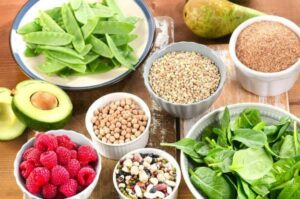
The “diet before diets” was heavily plant based—rich in greens, vegetables, fruits, legumes, whole grains, nuts and seeds.
I hope you’ll reconsider jumping on every bandwagon each time a new fad diet comes out.
Original Plant-Based Diet
The “diet before diets” was heavily plant-based (as opposed to vegetarian or vegan, which implies no animal products, ever) rich in greens, vegetables, fruits, legumes, whole grains, nuts, and seeds. Healthy people from all over the world, as documented best in the Blue Zones research, ate quite widely varying diets based on what was available in specific geographic areas.
But all of the Blue Zones eat a heavily plant-based diet, and two of them eat virtually no animal protein at all.
Dr. Joel Kahn | Wayne State Clinic
Here's another quote by cardiologist Dr. Joel Kahn, MD, Wayne State Clinical Professor of Medicine and guest in Vibe Podcast Episode 140:
“While ketogenic diets prompt the production of ketone bodies as fuel and are of proven value in rare cases of refractory epilepsy, they are also associated with data in several studies suggesting they boost the long-term risk of premature death. I would not advise the daily use of a long-term ketogenic strategy based on animal product consumption.”
Diets for a Longer Life
If we must attach a name to the “diet” associated with health and longevity, the plant-based and Mediterranean diets are the only ones that consistently show long-term positive outcomes, across thousands of published studies.
Dr. David Katz | Yale Meta-Study
The 2013 Yale meta-study under the direction of David Katz, MD, reviewed over 10,000 published studies in the field of nutrition over the course of the past decade and concluded that the most consistent finding is that eating more plants prevents disease. I've spoken with him on what true health means and how to get there in Episode 90 of the Vibe Podcast for even more valuable information.
Plants vs Meat Diets
Both the Paleo and Keto diets, the way that most people follow them, have people eating even more animal foods than in the Standard American Diet.
Primarily plant-based diets are what the vast majority of people ate before there were “diets.”
Disease and Processed Foods
Of course, there has been a wide variety in the specific foods eaten by various peoples, based on their availability, for 3.4 million years of human history.
But degenerative disease was rare in cultures eating whole foods, including mostly carbohydrates, for the entire history of humans, until 100 years ago when the processed food industry was born and the diet industry followed right behind it.
Do you have more questions about the keto and paleo diets? Do you want to know more about a diet with whole and unprocessed foods? Feel free to leave your questions in the comments section below.
Up Next: I Went Fasting Without Food for 40 Days | Here’s What I Learned
 Robyn Openshaw, MSW, is the bestselling author of The Green Smoothies Diet, 12 Steps to Whole Foods, and 2017’s #1 Amazon Bestseller and USA Today Bestseller, Vibe. Learn more about how to make the journey painless, from the nutrient-scarce Standard American Diet, to a whole-foods diet, in her free video masterclass 12 Steps to Whole Foods.
Disclosure: This post may contain affiliate links that help support the GSG mission without costing you extra. I recommend only companies and products that I use myself.
Editor’s Note – This post was originally published on January 3, 2018, and has been updated for quality and relevancy.
Posted in: 12 Steps To Whole Food, Eco Friendly Living, Health Concerns, Lifestyle, Whole Food











I’ll take Dominic D’Agostino’s word over yours thank you.
Pretty sure myself and other biohackers I know aren’t walking fads lol. Especially when it’s been proven in marathons, ultras, climbing (for me personally), healed my autoimmune. No citations, no studies listed, no peer reviewed resources, using major sources like U.S. News and World Report (lol). I work in technology and manufacturing. The rest of my family is in medical. Me being the black sheep I healed my own health using the fads you mentioned. But you know I guess being one of the best performers on 12 hour night shifts building the cars of the future is a bunch of hogwash since this is just a fad ;). Have a great day. I’ll keep my “fad” lifestyle. Oops. I mean “diet”.
there are no peer-reviewed studies….part of my concern about keto. it’s too new. there are, however, many peer reviewed studies on the negative effects of the atkins diet, which isn’t the purpose of this article (which I stated), but the whole idea of overeating fats to achieve ketosis has already been thrown off the stage. biohacking itself is a fad.
Thanks for publicly stating what I have quietly believed to be true for a long time. I, too, predict that the fad will not last and that long term health damages will result for those who stay on it. Last year I was a house quest with a paleo family. I politely ate their diet, and by the time I left, I was constipated and temporarily addicted to meat, which I normally eat very sparingly. How about the bad body odor of those who eat so much animal protein!!
I agree with what you’ve written – some very good theories have evolved into big mass marketed machines, and no one approach gets universally wonderful results. I eat Paleo not because of the philosophy, but because I’m a Celiac who also responds poorly to most grains and Paleo fits better than most eating approaches. One of the more interesting books I’ve read recently is called “The Personalized Diet” by Eran Segal, an Israeli researcher. Like your book on juicing, it’s not actually about dieting or weight loss per se. In fact it has no food lists or recipes. It’s actually about how these nutritional researchers ended up using Blood Glucose meters to determine what foods their study group was eating that were individually optimal. They discovered they could use BG meters to isolate what foods/means were best for for you as an individual, not somebody else and made it practical to apply the techniques in the real world. The book is basically an extension or expansion of their study. The authors delve into the myths of there being a Universal’ diet and go into the surprises of their research findings. As one of the persons who always gets the wrong results on innumerable eating plans, I’ll be using their methodologies to see if I can actually end up with a personally optimal diet. This is not going to be a ‘popularized’ book because there’s no opportunity to mass market a food line (Like Paleo, Keto, Whole30, has done) There won’t be any cookbooks written, either as each person’s diet results will be different. But it may just provide the tools for those of us who really do need to sort out food issues. Time will tell.
interesting, Jean, thank you. i’ll have to read The Personalized Diet.
Good information, Jean. I am also eating as you do for a couple of reasons. Grains and beans in my diet give me insane cravings. I am so at peace eating vegetables, meat or fish, and an occasional fruit. I am using the autoimmune paleo guidelines so eventually I will be reintroducing foods one at a time to check my reaction. For instance, brown rice makes my blood sugar surprisingly high. I also have read about the Israeli research but It was too confusing to check my blood sugar reactions while eating a more varied diet. Philosophically, I would love to not eat meat but for right now it is what works for me. I think the biggest take away is that one way of eating does not work for all.
I will continue to follow Dr. D’Augustino. I have follow a ketogenic lifestyle for over a year. The health results have been amazing.
Yevette, if you’ve had health benefits, it’s from getting off processed food. (Keto gets you off processed food, while getting you ON to way too much other animal-based foods, and too much fat, in general.) I hope you’ll read more about the long-term health risks of the bacon-and-butter lifestyle.
i didnt bother to read ur entire article as soon as I saw you equated keto fats (MCT, coconut, olive oil, and avocado oil) with Atkin’s animal fats. That’s apples and oranges, my dear. I lost 60 pounds eating sugar (the end result of carbohydrate loading.) So what? Now I have tumors: Carbs (sugar) feed cancer cells. I think you believe “keto diets” are something different than I do.
Jaki….no, I didn’t. (you should read the whole article)
At last someone who makes sense how can fat remove fat?if our cells are full of fat how can the sugars that the cell needs enter . the sugar stays in the blood causing major problems. It makes a lot more sense to just eat plant base foods
Good fat is a good source of energy, but we are not good at storing fat as fat. Many people perceive this as a contradiction, but it really is not.
On the other hand our bodies are good at storing sugar as fat.
I eat a lot of ghee, i.e. milk fat, and fat from meat and eggs, but I inspite of that have very little fat on my body. If I eat high carb foods, I start to store fat, though.
Other animals often function in the same way. Cows, for instance, eat grass with quite a lot of sugar in it and produce fatty milk thanks to that. If they eat grains, which contain more sugars than grass, they produce even more fatty milk. (On the other hand the milk and its fat will be less healthy to drink. Also the cows get sick when eating grains, soy and corn, even more so if the crops have been sprayed with pesticides, like for instance Round-Up and other glyphosate products.)
Thanks so much Robin, you have done a great service in exposing the truths about these two unhealthy fads! Whole foods plant based eating is so much more powerful in realizing our greatest human potential!
Robyn, this is fantastic and confirms all my believes about dieting and the fads suggesting high animal protein and fats. You have really made a point here and I so wish that as many people as possible will read your write-up. Thanks for sharing so freely. Brigitte
AMEN! AMEN! AMEN!!! Thank you Robyn for sharing this. I have been lovingly trying to share my very same thoughts with both friends and clients over the past several years – some listen, and some do not. Four years ago to date I wrote a blog post about the Paleo diet and the great concern I had for cancer patients who would embrace the “love of bacon and meat” diet. Sadly, a friend who was a 15 year survivor had her cancer return after going Paleo to lose a great amount of weight. In researching Ketogenic, which became the new fad these past 12 months, it also has its drawbacks, especially long term.
Interestingly enough, back in 2010, when I made a lifestyle change using common sense and studying the articles of Dr. Russell Blaylock, I turned my health around by eating 50%+ vegetables and greens – including a daily green smoothie; organic whole grains such as teff, quinoa, brown rice; a small portion of free range chicken or wild caught fish; and a bit of good fat such as avocado, coconut oil, raw nuts. After losing 80+ lbs in 9 months I learned of ketosis. I was curious and bought the ketosis test strips – and without consuming high amounts of fat there were days where my body was in the state of ketosis, which I found interesting indeed.
People tend to give credibility to book authors, such as yourself, more so than those who teach the same through life experiences. By writing today’s blog post I can share your view, which I 100% agree with, with my own followers, and share it with family and friends personally of whom I am concerned continue to follow fad diets vs. sustainable lifestyle choices.
Rita, thanks for sharing your thoughts and experiences. Ketosis without eating lots of fats….interesting, and Alan Christianson, NMD’s quote in my blog post may explain WHY you were burning ketones despite not purposefully manipulating your body there, with mostly eating fats. Love Blaylock!
Hey Robyn, I am a big fan of yours because of the quality of your products and your straighforwardness. I agree with some of the points and disagree with others. No need to go into details (i want to avoid the rabbit hole). The Prime weakness of this post is that it is extremely biased. You cite a number of experts who are anti keto and a bunch of research studies that have come against keto. It is clear that your mind was already made up and you just wanted to put together data to support it. The true is that for every expert opinion or research data you presented, there one out there that says the exact opposite. There is more than meet the eyes when it comes to interpreting research data. Please take time to read ‘The big fat surprise’
Keto was around long before atkins. All other low carb fads spiraled from keto. keto was designed at the mayo clinic to treat chronic seizure patients and has shown better outcomes than pharmacological therapy.
There is a lot of misconception on keto and a lot people are doing it wrong. There is nothing healthy about gobbling up a bunch of oil and meat.
But at the end of the day, you are still the Queen of wholesome Unprocessed plant based food. I have done your program and went into lazy keto with a high proportion of unprocessed plant based food. I never felt better. very sustainable.
well, there’s a chicken and egg debate here….you’re assuming i decided in advance that keto was bad, didn’t do any research, and cherry picked what i presented. in fact, it’s the other way around. i’ve been studying it for years, and presented conclusions here. it’s an editorial, and my conclusions are that this is a fad diet, that will go away, and in fact, science will kick it off the stage (which is what happened to Atkins)….but you’re free to disagree. and “people doing it wrong” is probably accurate….but who decides what “doing it right” is? the fad diet authors? and, i agree, atkins wasn’t the FIRST diet fad to obsess about “ketogenesis.” did you read Alan Christianson’s comments about how ketogenesis even happens, in my post? it doesn’t have to be by eating tons of fat, and in fact, shouldn’t be.
Great analysis of diets. 30 years ago i had my gallbladder removed. Have just found out what some of the issues are with no gallbladder. My husband and I eat all natural foods, no fast foods and no pre made foods. Still trying to balance our bodies with good food and exercise.
Just so you know … consuming fat is NOT required to go into ketosis. Ketosis only requires that insulin production be inhibited. I assume the smoothie cult would never figure that one out.
hey Robert–you didn’t read the article, I think? because it SAYS that.
that overconsumption of fats…which the fad diet teaches…..doesn’t actually even cause ketosis. (read Alan Christianson, NMD’s quote).
idk if there’s a smoothie cult….probably. but i’m really happy that my work for the past decade or more has helped people get more nutrient density in their diet, blending a lot of greens and superfoods and drinking a quart a day. i consider it to be one of the most important things i’ve accomplished to help others, in the 50 years i’ve been here.
After a friend of mine (who had been vegan for 7 years and tried other “diets” for the purpose of healing her autoimmune disease) tried keto ( as recommended by her doctor) and benefited greatly from it~ from losing 50 lbs and being able to decrease meds and lose fatigue….I did a ton of research and decided to try it also. I went one month , and I ate a very very healthy version of keto…grassfed, organic meats, raw cheese, avocado, mct oil, coconut oil, nuts, veggies, etc…and became very very sick…to the point I would have to crawl into bed with my knees up to my chest trying to get some relief from the pain everytime I ate a meal. I didn’t even want to eat food because I knew once I did, whatever I ate would send me into such pain, nausea and the rest of my day would be ruined. I lived like that for a week and decided I had seen enough. As soon as I put carbs back into my diet, I was fine again. My sister, now, has taken up the keto, has lost 50 lbs, and feels much better than she did before. However, I have told her I am concerned for her long term health because she eats the same foods over and over and it’s pretty much meats and cucumbers ( she doesn’t like a whole lot of greens, veggies). Plus, she doesn’t LOOK healthy. I guess I prefaced with all of that to say this : yes, one can do well on a keto type diet….but it definitely is NOT for everyone. ( I will NEVER attempt it again)….and I think it may be beneficial for a period of time for some people….but I agree with the author that ANY eating plan that eliminates whole groups of foods is one that should not be considered a lifestyle…..I think there was a lot of merit to what was written here
hi cureforjesse…..wow, interesting. the different experience your sister has, versus you. check out “even cancer is better with bacon.” (he died in 2015. of cancer. after promoting keto.)
there’s how we FEEL when we “do” the diet. then there’s the fact that it’s BEYOND proven that eating that much saturated fat has been proven to cause many of our disease epidemics.
Thanks for the article Robyn – it was very interesting! As a natural health enthusiast and blogger, myself, I am always reading various things about diets and nutrition, so I was interested to hear what you had to say. I think we are pretty much on the same page for the most part, though I may disagree with a couple of your points.
I am not really a fan of any kind of extreme diet (I’ve written several blog posts about this topic) – I don’t feel like they are natural for the human body, though they can be useful in short-term “cleanse” or dietary therapy sessions. Veganism, for example, I think is a great way to cleanse and detoxify for a few weeks, but I don’t feel like it’s healthy in the long term. Same thing perhaps for the newly popular “Keto” diet, which sounds really weird and not very healthy to me, but I know some people have experienced great results – at least in the short term.
I am much more comfortable with Paleo, though I don’t agree with or understand the exclusion of legumes?? And dairy is also something that humans have consumed for thousands of years – although certainly NOT in the highly processed and adulterated forms that we now find ourselves confronted with in today’s grocery stores. For most of human history, we have consumed raw milk and various forms of fermented milk – almost none of which we consume in the modern day American diet (with the exception of yogurt – but even that is full of sugar and artificial crap that we never consumed much of until the past century or so).
I am dismayed by the passionate adherence of so many people to so many of these extreme diets… So many (if not all) of our modern health problems could be fixed simply by eating a balanced diet of REAL, WHOLE foods! One that includes lots of healthy, nutritious vegetables and fruits, and smaller amounts of whole grains (for those who don’t have problems with grain), unprocessed and organic dairy, grass-fed meats and eggs, and natural, minimally processed fats – including clean animal fats from organic pastured animals as well as fats from fruits like olives and coconuts. The problem is that everyone has to make a buck off of human’s natural tendency to want a “magic pill” or a “quick fix” for everything that ails us… Thus, we are faced with literally thousands of choices when it comes to eating – many of which come with an agenda attached that isn’t necessarily in the best interest of our long-term health.
Along with the statement above, I should add the caveat that the more I read about health and nutrition, the more I am convinced that there is NOT a one-size-fits-all dietary standard. So many people have sensitivities to different types of foods, or simply do better on some foods, and worse on others – as evidenced strongly by the comments above!
I don’t think anyone should be running around telling everyone else that they simply MUST eat Vegan or they will die a horrible death (yes, I have heard vegans say almost these exact words – even though most of the vegans I have known have seemed extremely unhealthy to me), or that they should try the Ketogenic diet since it’s the best diet ever known to man, etc. I think the definition of eating healthy can vary from person to person – though this means that we have to put a lot more work and thought into what we eat, in order to figure out what foods we do best on, and what to avoid. Essentially a “customized diet” for each person may be what we need, and I am interested to check out the book mentioned above in the comments, “The Personalized Diet.”
However, as a caveat to my caveat… 🙂 It is highly possible that many of our “food sensitivities” and allergies are actually caused by 1. eating junk for so many years, and 2. the processed nature of our diets, rather than the foods themselves. It is possible that after eating a natural, whole-foods based diet for some time, some of these sensitivities would diminish, and we could then tolerate and enjoy foods that previously caused problems (for example, grains and dairy).
Lastly, as I know I’ve rambled on long enough, I wanted to thank you for your emphasis on “mainly plant-based.” I have always objected to the use of the term “plant-based” to refer to veganism, as technically, a diet that is “based on” plants could include other foods as well. I like to say humans should consume a “plant-centered” diet. 🙂 That is, centered around plants, but including other clean and well-managed sources of nutrients as mentioned above.
If you want to check out my VERY simple philosophy on healthy eating, I refer you to this article: https://www.newholisticliving.com/1/post/2016/03/the-only-2-rules-for-healthy-eating-you-will-ever-need.html
Thanks again for your thoughtful post!
Rose.
thanks for the comments, Rose. like you, i’m not comfortable with taking a hardline approach about “veganism” or “vegetarianism.” even though it’s beyond clear that a mostly plant-based diet is the best diet (Yale metastudy, China study, Framingham heart study, Harvard nurses’ study, Blue Zones, many decades of studying the mediterranean diet…these are the most longitudinal studies as well as the meta-studies that review all the OTHER studies)…..i don’t think it’s clear at ALL that eating “no animal protein at all” is the “best” or “only” way to eat. so, we must allow for bioindividuality, and for choosing among the animal foods which ones you want to eat. i don’t feel good eating animal products. other people don’t feel good unless they DO.
it’s beyond clear though, that eating mostly whole foods, and mostly plants, are the two guiding principles to staying healthy.
I’m not a fan of diets, beyond being organic and balanced. However, do to systemic candida have been looking at all kinds of things. After reading this and the comments, I wonder how many actually have systemic candida and are unaware of it. Most doctors don’t even think of it, much less test for it or other fungals. I also wonder Robyn what you have to say about dealing with systemic candida.
hi Marama…..it’s a tricky answer, how to get rid of candida. (and i think i answered that, for someone else, here in the comments today? or maybe it was one of our detoxers….i’ve spent most of the day in BOTH places.) but here’s why the answer is tricky: what you’ll likely need to do, to starve out the yeast that has the upper hand for you, is NOT what a long-term, sustainable, disease-preventative diet.
hate to say it, but you’ll probably need to eat quite a bit of animal products in the few months it takes to starve the yeast. why? because you’ll have to eliminate all grains, fruits, even legumes….anything starchy, maybe even limit the starchy vegetables, potatoes for sure…..and therefore, with what’s left, greens and most vegetables, you’ll HAVE to eat a bunch of meat, to get enough calories.
make sense? however, you, CAN starve it out–trillions of yeast cells will SCREAM for sugar, it will really test you, to have the self discipline to stick it out, but you probably have your SYMPTOMS motivating you, which I’m sure you’d LOVE to get rid of…
so. in your case, it’s probably going to have to be lots of greens, healthy fats, vegetables, and animal protein, for a few months. sound about like what has been recommended to you by your functional medicine practitioner? (i’m curious.)