

Why Ketosis Diets Will Fail: The Paleo and Keto Manifesto

The most disturbing trend in wellness these days is that most people have no idea what to eat.
When choices were fewer, 100 years ago, how to eat for good health was much clearer. Americans have been so steeped in diet fads that they’re now thoroughly confused about food.
What You Need to Know About Ketosis
In this article:
- Changing Diets and Fads
- New Fad: Low-Carb Ketogenic Diet
- Ketogenic Diet Skeptic
- The Diet Industry and Their New Fads
- The Calorie and Carbohydrate Restrictions
- Fasting for the Keto Diet
- Is a Low Carbohydrate Diet Good for You?
- The Vegan Diet
- Why the Keto Diet is Doomed
- Keto Quotes | Experts Challenge Ketogenic Myths
- Gerson Therapy | Nutritional Regimen for Cancer
- Reconsider Diet Fad-Hopping
- Diets for a Longer Life
Changing Diets and Fads
Recently, I mentioned to a millennial that when I was a kid, we didn’t have bottled water, and she said, with a shocked look on her face, “Then how did you get any water to drink?!”
Programmed Food Cults
Similarly, modern people think that in order to eat, you have to follow one of the diet fads. A strange feature of life in 2018 is the need to align with a programmed “food cult,” as I call them.
Thanks to some strange cultural and market forces I do not believe to be particularly helpful to our overall health, food has become much like religion.
Many don’t know how to eat outside of what their food tribe, congregation, or pastor tells them, and every few years, many people convert to the new cult.
“I’m Paleo,” people say—as if identifying with a coat of arms.
I’ve been asked countless times, “What diet do you eat?”
New Fad: Low-Carb Ketogenic Diet
Several years ago, I wrote a detailed blog post on why the Paleo Diet was a fad, wouldn’t last, and why it would eventually be supplanted by a new fad aggrandizing fat rather than protein.
Paleo followers wrote murderous emails and comments.
Now those same people, it seems, are rabidly promoting the Ketogenic Diet.
The Paleo Diet
I felt I was fair to the Paleo Diet. We were friends, to a point. At least the Paleo cult banned processed food, even while glorifying animal flesh foods and strangely vilifying entire classes of foods that hominids and humans have eaten for 3.4 million years:
Now, it seems, we’ve gone from the proverbial frying pan to the fire.
New Golden Child: High-Fat Diet
As I predicted would happen from many live stages on my lecture tours earlier in this decade, the new “golden child” in the diet industry is, predictably, fats.
It turns out over-eating protein saved us from exactly nothing. Following historical trends, then, a new diet fad must be born to instruct the Western world how to eat.
To clarify, fat isn’t really a “new” golden child. It’s a recycled golden child since Atkins already did it, and the Ketogenic Diet isn’t all that different from the famed Atkins Diet that many published studies showed was not beneficial to our health.
Ketogenic Diet Skeptic
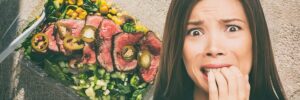
Eating mostly meat can lead to many health and wellness issues
The least profitable foods—the ones that grow in the ground and on trees—are the least likely to get any significant attention from the food cults.
Paleo and Ketogenic Diet Failure
The most profitable foods (those in packages, made with “proprietary processes” and stamped with “Paleo Friendly” or “Keto Approved”) also have the lowest vibrational energy, the lowest micronutrient levels, the lowest fiber, and the lowest ability to prevent disease.
I’ve invited some of my friends—medical doctors, researchers, and authors who have watched the diet industry’s chokehold on the American diet with growing alarm—to weigh in on the latest fad now often called “Keto.” Their quotes are included in this blog post.
The Inevitable Keto Failure
I believe this latest ketosis diet will be chased off the stage by research that was already published at the end of the reign of the Atkins diet fad, along with additional research that's sure to come, all showing the overwhelming negative health effects of overeating animal products and repeatedly manipulating the body into a state of “ketosis.”
I also predict that five years from now, the same people advocating the “ketogenic diet” currently will be onto a new fad, promoting the new golden child instead.
The Diet Industry and Their New Fads
The diet industry is constantly changing and selling new ways to lose weight or be healthy
Here’s the thing: the diet industry is big business. Tens of billions of dollars a year. It’s in collusion with the packaged food industry.
These wealthy industries aren’t going anywhere, and they are a treadmill, needing a new fad every few years so they can replace “Paleo Approved” products with “Keto Approved” products and create the false need for more consumption.
Why Are There So Many Diet Plans?
The diet authors and processed food industries pivot, pose, and preen based on whatever is popular, not what’s actually good for human health.
Elimination Diets
The cabbage soup diet. The green smoothies diet. The werewolf (lunar) diet. The grapefruit diet. The tapeworm diet. The blood type diet. The apple cider vinegar diet. The cotton ball diet. The wheat-elimination diet. The alkaline diet.
The authors of some of these books are friends of mine. Good people.
And I’m not innocent. I wrote The Green Smoothies Diet, after all. (I threw that in the list, to be fair. Someone would have brought it up.) I’m willing to put my own book on the pileup to make an important point.
The Green Smoothies Diet
As a side note, though, may I share why I wrote that book? What I actually wrote wasn’t a “diet” at all. It was about how combining lots of superfoods and greens in a blender is an answer to our nutrient insufficiency, in an age where we want all our food to be “fast.” But the publisher insisted on naming it The Green Smoothies Diet. "Write whatever you want," they said, "but we WILL call it a 'diet,' and if you refuse, we’ll find another author to write it." That book has sold more copies than my other 14 books combined (which demonstrates the point: diet books sell).
The Big Business of Diet Fads
So, aggrandizing one food class, or one food, as if it has magical properties that will save everyone from every disease, is good for business.
Vilifying a class of foods, and teaching people how to avoid them, is big business, too, and fundamental to the diet industry.
To do either of these things, you generally have to cherry-pick data, ignoring a great deal of evidence to the contrary.
The Diet isn’t for Everyone
I play tennis competitively, and on the court recently, one of my tennis teammates was doubled over. It was only 9 am, so I asked:
“You seem really tired, what’s wrong?”
She said, “I’m on the ketogenic diet, and I’m exhausted. My husband just got really ‘shredded’ on it, but I don’t feel good at all.”
The Calorie and Carbohydrate Restrictions
Cutting carbs from your diet is not a healthy or sustainable way to reach your health goals
You can lose weight in countless ways. Atkins, Ketogenic, you name it. They’re banning whole categories of foods, and they’ve all been shown, in studies tracking what the dieter actually eats, to be clever forms of calorie restriction.
(Many evaluations of the popular diets since Atkins have shown that since no one wants to eat unlimited protein or unlimited fats, dieters end up eating fewer calories.)
Low-Carb Diet
But the human body has lived on carbohydrates—70 percent carbohydrates, on average—since the dawn of time. It’s the food your liver requires.
Carbohydrates aren’t bad, just by virtue of being carbohydrates.
The talk about “carbs” is virtually meaningless, since most foods are high in carbohydrates.
Different Types of Carbohydrate Intake
You’ve got simple and complex carbs, whole-food carbs and refined-food carbs. You’ve got “carb” foods full of important soluble or insoluble fiber—or both.
You’ve got wonderful “carb” foods that are extremely high in micronutrients (hundreds of different vitamins, minerals, enzymes, phytonutrients)—and others that are worthless, and harmful, with virtually no micronutrients.
Shortcomings of Fat and Protein Intake-Only Diets
It should be noted that “proteins” and “fats,” though they have important properties needed for health, are almost always foods with little or no dietary fiber and very low micronutrient density as well. Since our gastrointestinal cancers epidemic is largely due to lack of fiber and micronutrients in the “standard American diet,” eliminating carbs seems a terrible idea for cancer prevention and treatment, especially when it comes to colorectal cancers.
Making ALL Carbs Look Bad
Truly, lumping all the foods containing “carbohydrate” into a single class makes little sense.
Because even if we narrow it down and look at two foods high in simple sugars as an example, a bagel and a banana are very different foods.
The Bagel and the Banana
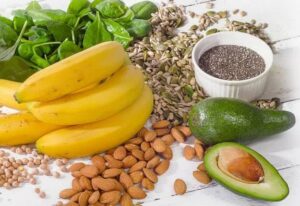
Bananas and bagels are both 'carbs'
The bagel is Roundup-sprayed (twice!), stripped of fiber and lacking any real micronutrients, gluey, and will slow your digestion. It has nothing to offer you besides a gluten reaction and a blood-sugar and insulin spike.
A banana, though, has soluble fiber and dozens of nutrients, including potassium and magnesium. It is a high-vibration food that contributes to longevity.
Calling both of these foods “carbs” is misleading—virtually useless, in fact.
The Danger of Restricting Carbs
Eliminating or severely restricting carbohydrates from the diet, as both the Paleo and Keto diets do, is especially problematic since foods considered “carbs” are the foods highest in fiber and micronutrients, which are linked, in thousands of studies, to reduced disease risk.
Fasting for the Keto Diet

Fasting is actually quite healthy for you; ketogenic fasting, however, is not
Fasting is part of the ketogenic diet, and fasting is a great idea.
However, to put the logical fallacy to rest: fasting is part of the ketogenic diet, and fasting is good for you, but that does not mean the ketogenic diet as a whole is a healthy, sustainable way to live or even a good way to lose weight.
Researched Benefits of Fasting
Fasting is well-researched and time-tested. Many cultures of the world have engaged in periods of not eating for physical purification as well as spiritual benefits, and many research studies show fasting to be beneficial for human health.
[Related Article: Will a Fasting Diet Give You The Results You Want?]
Fasting Problem with Ketosis
The benefits of fasting aren’t necessarily related to the state of “ketosis,” where starvation supposedly forces fat burn. (See Dr. Alan Christianson’s quote below about whether “ketosis” is even what the Keto diet claims it is.)
I’m far more interested in the induced state of autophagy from a 12-hour fast, or for a longer fast lasting several days.
I’ve water-fasted (no food, only water) for stretches of 7 days, 9 days, and 12 days in the past two years.
Why? Because in autophagy, when the body has no food, it scavenges aberrant cells and sends immune function into high gear, gobbling up cancer cells, yeast, mold, byproducts of metabolism—generally and specifically cleaning house.
Fasting for a Long Life
I believe fasting is one of the most powerful things you can do for longevity and to avoid chronic disease. Thomas Lodi, M.D., a Columbia-trained medical doctor, presents all his cancer patients with information on water fasting and tells them it’s the single most powerful thing they can do in their treatment.
Why Fasting Doesn’t Work with Keto
Compare that to the ketogenic diet plan, where you may be advised to drink acidic coffee full of butter alongside a plate of bacon. This is unsustainable, unpalatable, and artery-clogging, as well as devastatingly low in chlorophyll, oxygen, raw enzymes, phytonutrients, vitamins, and minerals.
Is a Low Carbohydrate Diet Good For You?
Let’s take a look at some of the myths around the diet industry’s theory that carbs make you tired, sick, and fat.
Ari Whitten and Wade Smith, MD’s book, The Low Carb Myth, says this:
“The Carbohydrate Theory of Obesity [an attempt to blame fat gain on carbohydrates and sugars] is based on numerous scientific inaccuracies, omissions of data, and countless instances of data cherry-picking.”
The Paleo Diet Do’s and Don'ts
One study showed the Paleo Diet to be most essentially defined, by its followers, as eating more vegetables. If that’s the case, we’re all friends here.
The Paleo Diet does ban white flour, processed sugar, and chemicals in your food.
Unfortunately, most people embracing it eat even more animal products (protein and fat) than the average American does, and that is an important note in pointing out the problems with the Paleo diet.
Banning Legumes, Fruits, and Grains
Legumes, fruits, and unprocessed grains have been part of healthy diets worldwide since the dawn of man 3.4 million years ago, as shown by recent research on early hominids at the University of Utah.
If you don’t want to eat legumes and whole grains, or if you’re reactive to legumes due to a damaged microbiome—fine, you can probably also stay healthy eating really clean forms of animal protein.
But keep in mind that it generally takes 20 pounds of plants to bring 1 pound of animal food to market.
The Vegan Diet
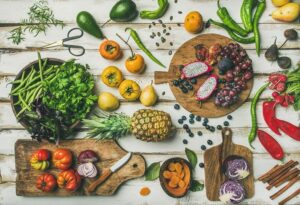
A vegan diet provides a number of health benefits many are searching for in other diets
If vegetarians and vegans make you angry (both Paleo and Keto diet proponents tend to be rather anti-vegan), check your thinking. Vegans may be dogmatic, and you may not like their style in promoting their diet, but their diet is using 5 percent of the Earth’s resources to sustain themselves, drastically less than someone eating the 30 to 60 percent animal proteins of the Paleo and Keto diets.
Less Damage to the Planet
Healthy vegans, the ones who eat whole foods as opposed to junk food, are living with far less impact on the planet.
Maybe you should thank a vegetarian today, even if you’re personally choosing to eat meat. The direction we’re driving the diet bus these days, with so many packaged foods and animal foods, isn’t sustainable ecologically.
Why The Keto Diet is Doomed

The ketogenic diet is not sustainable, for you or the environment
We can all be friends, and I love the Paleo Diet for getting people off processed food.
But Paleo’s new, sexy sibling, the Ketogenic Diet? It’s just bad news. It’s lipstick on a pig.
(Let the hate mail begin.)
And the worst of the bad are these people selling toxic jugs of “ketones.” Please don’t drink this plastic, petroleum-product garbage. It’s pure marketing, it’s not food, and it’s not good for you.
Scientific Warnings Against Ketosis
The Ketogenic Diet will eventually be run out of town by scientific studies of long-term results, just like all the others have. (Eat Right for Your Blood Type, Atkins, and Paleo come to mind.)
And in fact, the Ketogenic diet is so similar to Atkins that many experts have written entire books warning America that the excesses of animal products and the strange “ketones” phenomenon represent a serious threat to public health, based on volumes of published research.
Think of the Long-Term Effects
Use your critical thinking skills rather than sign on as a human guinea pig every time the diet and food manufacturing industries put a new spin on a tired, old debunked concept in front of you.
We already know what people eat to lose weight and keep it off. High-fat, bacon-and-eggs meals with coffee? That’s not it.
No Health Benefits
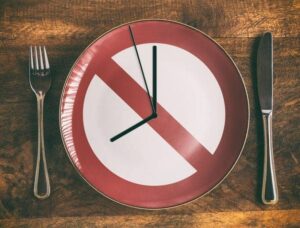
The Keto marketers have brought one of the worst, but most popular, diets in the history of diets (Atkins!), back to life. With a fasting twist.
Cancer survivor and nutrition researcher Chris Wark says, “The ketogenic diet is like fasting, only with none of the health benefits.”
With the ketogenic diet’s new obsession with “fasting,” diet marketers have taken something good and made it into something commercial and less-than-helpful.
Just Another Atkins Diet
In effect, Keto marketers have brought Atkins back from the dead, even though it's one of the worst diets in the history of diets.
The twist? It’s still bacon and coffee for breakfast, but this time, there's fasting!
Haven’t we evolved past this? If you eat for ketosis, plan to have constipation, bad breath, yo-yo weight loss and gain, and your liver breaking down, just like happened for millions of Atkins sufferers and Dr. Robert Atkins himself, who suffered from heart disease.
We already learned with the Atkins Diet that bouncing in and out of ketosis is a great way to end up heavier than you started, possibly with a new diabetes diagnosis.
Keto Quotes | Experts Challenge Ketogenic Myths
Ari Whitten and Wade Smith | The Low-Carb Myth
Ari Whitten and Wade Smith, MD, said, in their book, The Low-Carb Myth:
“….the notion of everyone eating diets of essentially nothing but fat and protein with only a tiny amount of carbohydrate as a widespread initiative to combat obesity is laughable, since any dietary pattern so extreme as to jettison an entire macronutrient (and simultaneously limit another one) is simply unsustainable for the majority of people.”
Harry Massey | Filmmaker
My friend, filmmaker Harry Massey, was convinced by a mutual friend of ours, one of the diet book authors, to try the new fad, and this is what he told me:
“I went on the ketogenic diet, I felt like crap, and three months later I was diabetic.”
I also did an interview with him on the Vibe Podcast, Ep.31: The Human Body Field with Harry Massey for more Harry Massey wisdom.
Dr. Joel Fuhrman | NYT Bestselling Author
Dr. Joel Fuhrman, MD, 4-time NYT bestselling author, joined me for Episode 37 of the Vibe Podcast, "Eat to Live," and shared these thoughts additionally with me about the ketogenic diet:
"There are many variations of the ketogenic diet, and some are more dangerous than others. One thing known without question is that the long-term safety of these diets is unknown, because studies would have to follow thousands of people for decades into their 70s and 80s to truly ascertain the true risks.W hat we do know with certainty from such long-term studies is that as the proportion of products from animal products increase in the diet, so does the death rate from cancer and heart disease.
"In other words, the quality and long-term safety of a diet can be determined by the ratio of 'produce' calories to 'animal product' calories. We also know that diets richer in antioxidants and phytochemicals—and with a broad variety of such anti-cancer immune-supporting substances—are critical to prevent later-life cancers.
"The ketogenic diet generally uses high amounts of oils, which do not contain a significant micronutrient content as a source of calories, thus diluting the micronutrient density of the diet.
"In summary, it is not the diet best designed to push the envelope of human longevity, though a ketogenic diet, if well designed, may not be as dangerous as the highly processed-food SAD diet, which contains dangerous ingredients such as white flour, sugar, fried foods, soda and junk food."
—Joel Fuhrman, MD
Dr. Alan Christianson | NYT Bestselling Author
I spoke at length with Dr. Alan Christianson, NMD, NYT bestselling author, in Episode 50 and Episode 121 of the Vibe Podcast. Here, he challenges the entire foundation of the diet:
“The ketogenic diet is a legitimate tool for helping reduce seizures among epileptic children who did not respond to medication. We may learn more in the coming years about benefits to other conditions, but most think of it as an easy path to weight loss.
“The underlying assumption people make is that the ketogenic diet makes them better at burning fat. Sadly, it does the exact opposite, and the confusion comes about from using the phrase 'burning fat' in two different contexts. Using fat for fuel is called beta-oxidation. Breaking down body fat is called lipolysis. Ketosis is the state in which your liver cannot burn fat for fuel. It can burn fat for fuel only when carbohydrate and protein are also present.
“A ketogenic diet only leads to lipolysis when it contains fewer calories than is needed. This is true of any diet. When a ketogenic diet has more calories than is needed, the extra dietary fat that is initially converted to ketones gets turned into triglycerides and stored as body fat.
“In a controlled human study comparing a ketogenic diet against a high carb, high-sugar diet with the same number of calories, the high-carb diet led to more fat loss than the ketogenic diet.
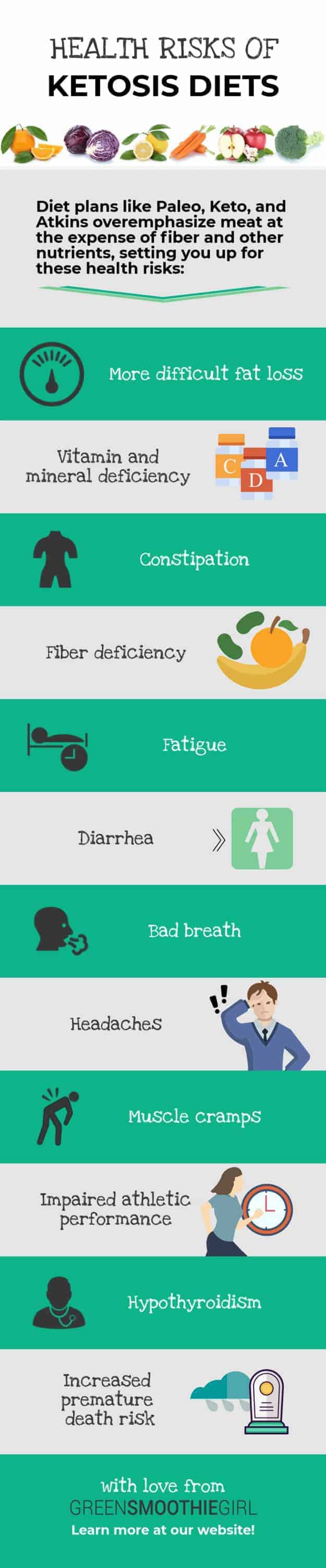
“Besides the lack of efficacy for weight loss, the ketogenic diet has risks to consider for those seeking to improve their health. The evidence supporting the benefits of dietary fiber, vitamins, and minerals, is undeniable. The ketogenic diet is devoid of fiber and low in vitamins and minerals.
“Along with a myriad of side effects like fatigue, diarrhea, muscle cramps, and headaches, people on ketogenic diets also run the risks of:
- hypothyroidism
- impaired athletic performance
“We may find more medical applications of the ketogenic diet and more ways to mitigate some of the inherent risks and deficiencies it creates. However, ketones are not the 'preferred' source of fuel for the human body, nor are they effective hacks for weight loss.”
—Alan Christianson, NMD
I collected more expert opinions on the trouble with keto diets (22 and counting!) which go into more detail than this overview.
Weight Loss Diet Rankings
When U.S. News and World Report ranked diets for nutrition and successful weight loss, the Paleo Diet ranked at number 32 out of 40, and Keto tied for dead last, at 39!
Keto Claim for Cancer
One of the most troubling aspects to the new diet fad is the claim that it will cure cancer.
When Dr. Charles Majors first began claiming that the ketogenic diet cures cancer, many experts demanded any longitudinal study with evidence of this. Not only did Dr. Majors fail to produce any, he also recently passed away. Of cancer.
Gerson Therapy | Nutritional Regimen for Cancer

The Gerson therapy consists of an intake of juices from a wide variety of fruits and vegetables
As a counterpoint, the Gerson therapy as a nutritional regimen for cancer has reversed tens of thousands of cancer patients’ Stage IV cancer for 100 years now, and while it’s not a miracle cure, in this age of toxicity and far more virulent forms of cancer, it is based on legitimate concepts.
1. Fresh Greens and Vegetables
First, more than 10 glasses a day of fresh pressed green and vegetable juice floods the body with nutrients and oxygen to detoxify and rebuild immune function. (The ketogenic diet is high in fats, but very low in both fiber and micronutrients, as Dr. Christianson pointed out in the quote above.)
2. Carbohydrate-Rich Foods
Second, Gerson uses efficacious, non-toxic methods of breaking down and eliminating tumor tissue. (That’s glucose plus oxygen in the cells, using organic plant material in “carbohydrate” foods rich in every known anti-cancer nutrient: the effect is alkalizing and cancer destroying.)
[Related Article: Gerson Therapy: My Observations From a 20 Clinic Tour]
Reconsider Diet Fad-Hopping
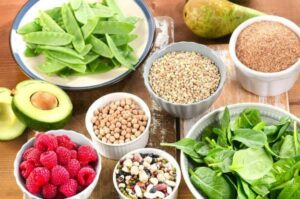
The “diet before diets” was heavily plant based—rich in greens, vegetables, fruits, legumes, whole grains, nuts and seeds.
I hope you’ll reconsider jumping on every bandwagon each time a new fad diet comes out.
Original Plant-Based Diet
The “diet before diets” was heavily plant-based (as opposed to vegetarian or vegan, which implies no animal products, ever) rich in greens, vegetables, fruits, legumes, whole grains, nuts, and seeds. Healthy people from all over the world, as documented best in the Blue Zones research, ate quite widely varying diets based on what was available in specific geographic areas.
But all of the Blue Zones eat a heavily plant-based diet, and two of them eat virtually no animal protein at all.
Dr. Joel Kahn | Wayne State Clinic
Here's another quote by cardiologist Dr. Joel Kahn, MD, Wayne State Clinical Professor of Medicine and guest in Vibe Podcast Episode 140:
“While ketogenic diets prompt the production of ketone bodies as fuel and are of proven value in rare cases of refractory epilepsy, they are also associated with data in several studies suggesting they boost the long-term risk of premature death. I would not advise the daily use of a long-term ketogenic strategy based on animal product consumption.”
Diets for a Longer Life

If we must attach a name to the “diet” associated with health and longevity, the plant-based and Mediterranean diets are the only ones that consistently show long-term positive outcomes, across thousands of published studies.
Dr. David Katz | Yale Meta-Study
The 2013 Yale meta-study under the direction of David Katz, MD, reviewed over 10,000 published studies in the field of nutrition over the course of the past decade and concluded that the most consistent finding is that eating more plants prevents disease. I've spoken with him on what true health means and how to get there in Episode 90 of the Vibe Podcast for even more valuable information.
Plants vs Meat Diets
Both the Paleo and Keto diets, the way that most people follow them, have people eating even more animal foods than in the Standard American Diet.
Primarily plant-based diets are what the vast majority of people ate before there were “diets.”
Disease and Processed Foods
Of course, there has been a wide variety in the specific foods eaten by various peoples, based on their availability, for 3.4 million years of human history.
But degenerative disease was rare in cultures eating whole foods, including mostly carbohydrates, for the entire history of humans, until 100 years ago when the processed food industry was born and the diet industry followed right behind it.
Do you have more questions about the keto and paleo diets? Do you want to know more about a diet with whole and unprocessed foods? Feel free to leave your questions in the comments section below.
Up Next: I Went Fasting Without Food for 40 Days | Here’s What I Learned
 Robyn Openshaw, MSW, is the bestselling author of The Green Smoothies Diet, 12 Steps to Whole Foods, and 2017’s #1 Amazon Bestseller and USA Today Bestseller, Vibe. Learn more about how to make the journey painless, from the nutrient-scarce Standard American Diet, to a whole-foods diet, in her free video masterclass 12 Steps to Whole Foods.
Disclosure: This post may contain affiliate links that help support the GSG mission without costing you extra. I recommend only companies and products that I use myself.
Editor’s Note – This post was originally published on January 3, 2018, and has been updated for quality and relevancy.
Posted in: 12 Steps To Whole Food, Eco Friendly Living, Health Concerns, Lifestyle, Whole Food











had a friend who was obese started running and ate only salads veggies etc. lost a lot of weight including her hair, suddenly gained 30 lbs in 2 weeks. Physical exam revealed lymphoma, got treatment went into remission. Very active woman. Out dancing dropped dead at age 47. Many points have been touted in decades past. I’ve eaten so much chicken and fish I could swim and cluck at the same time. Ate low fat for years ballooned to obese. Added good fats olive oil flaxseeds and flax oil and coconut oil.. back in lost 50 over years. With exercise and good diet I can lose 10 to 13 lbs in 6 months my lab numbers look better than ever. Every winter of my life even when slim gain 5 to 10 lbs. I’m 65 female. Was slim entire life until age 44. Have not been able to unlock the secret to steady 2 lb a week weight loss. I’ve done professional plans and had the instructors accuse me of cheating and not following their diet plan. I feel best with great energy on seeds nuts, yogurt, skim cheese, 2 to 3 oz of beef, still eat lots of chicken, beans, greens, veggie salads, apples, berries, matcha, oats. .I did not feel well when I ate only chicken and fish likewise veggies only. For many women I believe hormones can wreak havoc.
i am exactly the same
Wow I am confused by confusion. I believe dieting is good for no one.
BUT what should we eat?
Bob
Hi Bob, a diet rich in greens, vegetables, fruits, legumes, whole grains, nuts and seeds as the staples is the most clearly linked to longevity and low disease risk. I have a short video masterclass you can watch here, about how I lost 70 pounds and eliminated 21 disease states:
https://greensmoothiegirl.local/12-steps/?gsg_campaign=12-steps-to-whole-foods&gsg_medium=blog-signature&gsg_source=gsg-site&gsg_content=robyn-bio&gsg_term=website-traffic
agree, L James. everyone has specific affinities for and sensitivities for food, too–not the subject of the article, but when I tested for food allergies/sensitivities, several years ago, I had only a few, and one of them was chicken. go figure!
I may have missed something but I did not see an alternate for the keto and paleo diet. If there is one let me know what it is. you have to have a backup to down the others.They may work or some people. I cannot do grains, legumes,sugar and dairy. So what is your answer for these for sensitivites?
Delores – there are so many vegetables, greens and organic meats to choose from. Cauliflower rice is a wonderful base for main dishes, as is spaghetti squash. Cashews make a wonderful “cream” base for soups – and my understanding is they are not a legume. You have plenty of options but it does take some work to find recipes – search for anti-inflammatory diet recipes which eliminate much of what you list as a starting point. HTH
I have never heard of a Ketosis Paleo Diet, also i want to start my 26 day Detox on Feb 3rd.
Thank You,
Robert Gamino
Such a great article! Thanks for sharing that! I totally agree. I try to tell people they are not healthy ways to eat at all and every one I know that has done it, can’t sustain it and gains back the weight. They are making their health worse.
Hi Robyn, I agree with your post and I am a diagnosed cancer patient (CLL). I believe in fasting for apoptosis and I was wondering about FASTING MIMICKING. What is your opinion on this one ?
Best regards
claude, i’m not sure what “fasting mimicking” means? i am not sure that a stage IV cancer patient in cachexia should necessarily be fasting….but Tom Lodi puts every patient, including CLL patients, on a 30-day fast if they can tolerate it.
My personal experience with cachexia is that Lyme could be an underlying issue (this was the case for my husband). I would like to encourage Claude to find a true Lyme expert to rule this out. Food with either starve or feed the spirochete parasite.
I enjoyed this article! Even if you don’t agree with all of it, it gets you thinking—and thinking is good! Just “follow the money” and you’ll find just about every problem with the way we eat. Fads in every part of life always come and go, because they make a lot of money.
I’d like to clarify one thing that you said about fasting. Saying that children after the age of eight are encouraged to do a 24 hour fast as a religious practice, is not correct in the Mormon church. Children are encouraged to try to fast for maybe an hour, or maybe a few. Working up to the 24 hours would take years. I doubt many teens do it that long. It is very individual, and one size does not fit all.
hi Lori, I’m a Romney and identified as LDS until I was 43, taught at BYU, and was the gospel doctrine teacher for many years…..while each family does it differently, that’s what i was taught in Primary and beyond, and in my family, you were supposed to fast after dinner the night before, until dinner….so, 24 hours. i doubt many teens fast at ALL, these days. i’m sure every family does it their own way.
I’m curious to know what you think of the Autoimmune Protocol (also known as Autoimmune Paleo or AIP). As you know, it’s an elimination diet that emphasizes eating nutrient-dense foods. Your plate should be 75% veggies (including carbs like sweet potatoes and squash). The rest is fruit, healthy fats and responsibly raised animals and wild-caught seafood. I’m doing it because I want to uncover food sensitivities that may be contributing to my autoimmune disease. I believe it is based on sound principles. Since you’re eating virtually no food additives or processed foods (with the exception of things like apple cider vinegar, coconut oil, etc.), I don’t see this as fitting the critiques you lay out above. However, I’d like to know if you have concerns about it. Just curious!
I’m with you, Alison. I, too, have an autoimmune dis-ease and eat much the same as you. I have seen true healing by eating mostly vegetables legumes and small amount of clean meat, wild caught fish, coconut oil, nuts, avocados, etc…
I have reversed many of my symptoms, chronic inflammatory pain, “swinging” bowel issues, headaches, fatigue, brain fog…and when I have, on occasion, “stepped out” of this way of eating, I suffer! This is most telling to me!
I’m getting that this article supports the way I eat and I completely agree with Robyn’s thoughts. Excellent work here!
hi Alison, basically, the way I feel about AIP is that it may be really helpful for an AI sufferer, in the short term. i don’t think that it’s normal or natural to be allergic to nightshades and legumes, and so, if you find that you are, my one caveat would be, while you’re avoiding those foods doing the AIP, to also rehab your gut. good fermented foods, a high-fiber diet, take a good probiotic made in small batches, etc. and don’t consider these wonderful, nutritious vegetables and legumes to be “off the table” for you permanently. consider it a period of healing your gut. i think most people who are reactive to lectins and nightshades probably are damaged by previous antibiotic use. so, my one concern with AIP is that it requires far more animal protein than we know, from extensive published research (see the Yale metastudy and Greger MD’s How Not To Die, his references page) that eating that much animal protein, long-term, is predictive of high cancer, heart disease, and AI disease. so, my concern is, for people following AIP, is that they eliminate entire classes of very nutritious, high-fiber, nutrient-dense foods. i hope they don’t become phobic of them, and i hope that they will get serious about healing the gut so they can return to these good foods, and decrease how much chicken, beef, fish, etc. they eat.
Thanks for the reply, Robyn. I eliminated gluten, dairy, soy, processed sugar, alcohol and caffeine back in April. My antibodies dropped from 175 to 100 in three months. Unfortunately, they were still steady at 100 three months after that, which is why I’m now trying AIP. I don’t plan to eliminate all these foods permanently. As you suggested, I’m working hard to heal my gut by eating lots of fermented foods, taking high-quality probiotics, etc. I hope I will be able to successfully reintroduce most foods. I’m viewing this as an opportunity to heal my gut and use “detective work” to identify foods I need to avoid for now (knowing that sometimes people successfully reintroduce things down the line if their first reintroduction attempt is unsuccessful) or, in some cases, possibly permanently. I’m a fan of your work, especially the High Vibration podcast. Thanks for the information and inspiration!
Thanks for your article. And thanks for having the courage to tell the truth about Paleo and Keto. I’ve given up flour and sugar in all forms, eat tons of organic veg and very small amounts of animal protein with small amounts of vegetable fat…mostly from nuts, seeds and avocado with the occasional splash of olive oil. The only grains I eat are whole, usually as some kind of porridge. I’m 60 years old, have lost over 50 pounds in the past year, feel great, sleep well, my blood work numbers are stellar, I don’t have cravings or headaches, any sign of depression is gone for good, and I’m not on any meds. The best part is that I can and will eat this way for the rest of my life…meaning, I’m not on a “diet”, I just eat like a human being should. No frills; no fuss; no muss. I’m on quite a few nutrition related email lists (yours being one) and I’ve watched in horror as Paleo and now Keto has taken the stage. The Keto diet is dangerous, and the idea behind Paleo is ludicrous. Modern, urban people have no grasp of how hard any amount of meat protein or animal fat was to come by in prehistoric or ancient times…even in more recent pioneer times. Sure, a tribe could bring down a buffalo or two, but it had to feed the entire community and after the initial feast, the remains were dried and stored to last over the winter. Paleo, as it’s presented, is not historic or natural, and is way, way out of balance from what was really available and healthy in times past. I enjoyed your article, and will look forward to reading more from you, and the sane, responsible nutrition folks like Ari Whitten. Blessings to you.
Jana, thanks for your comments. Ari is a good friend and digs to the bottom of the issues as well. I predicted people would be angry and defensive–and they have not disappointed, on that front. Someone in the comments above said “blood work doesn’t lie,” about how his blood work improved “eating keto.” While blood work may not lie, (a) blood work may have improved just from getting off the processed diet, where even keto is an improvement, and (b) blood work does not tell you anything longitudinal–or, in other words, it doesn’t tell the whole story about disease risk.
I am so delighted to hear your thoughts on this, Robyn. I have several dear relatives who seem enthused about Ketogenic and Paleo diets and my life long attention to weight loss had me asking serious questions…all of which you address with intelligence here. I have done GSG detox and do consume a lovely GS every day, I eat a largely plant based diet, have maintained a 70 pound weight loss for 16 years. Thank you for keeping us on track and healthy and energetic. Love, Mary Tejeda
There is a whole range of Keto eating. I think you are just looking at one extreme end of Keto. I am a 52 year old woman who has eaten healthy for years and exercising, but my weight began increasing five years ago no matter what I did,. I had brain fog, adrenal and thyroid problems. The only thing that has worked for me is eating keto and cycling carbs in every few days. I am able to intermittent fast until noon to 2 PM most days. I usually eat a variety of low carb veggies sauteed in avocado oil with 2 eggs for lunch. For supper I usually have a large salad with homemade dressing and a moderate amount of whatever protein I’m making for my family.
My understanding of keto is that it is lots of healthy fats, moderate amounts of clean protein and lots of low carb veggies with carb cycling every couple of days.
Bloodwork doesn’t lie. I haven’t been this healthy in years. Sleep so well, tons of energy, no brain fog, hormones regulating. I have experienced none of the negative symptoms mentionned in this article.
From what I’ve read this really works for people who have tried everything else and it didn’t work. Everyone is different and the same way of eating won’t work for everyone. Please don’t throw this way of eating under the bus. It has helped so many people.
Thank, I would wholeheartedly agree 🙂
Jan, I’ve had the same experience as you. My thyroid has improved, food sensitivities reduced or eliminated, lots of energy and weight loss. All my blood work has not only improved but looks great! Also, I struggled with other weight loss programs.
I am loving not being at the mercy of carb cravings any more. There’s no way I could have painlessly fasted for 60 hours before keto. My naturopath recommended this way of eating and I was a bit wary, but had tried everything else to no avail, so I gave it a shot. It’s been 5 months now. Had bloodwork done after 2 months and it was great! Going tomorrow for 2nd set of bloodwork. Excited to see results! Keto on!
I am the same age and have had the exact same experience as you Jan. I ate a “healthy”, whole-foods diet for years, was extremely overweight, pre-diabetic, and had thyroid, adrenal and autoimmune issues. I started eating Keto almost exactly as you’ve described at the recommendation of my naturopath – in addition to intermittent and long-term fasting. I haven’t felt or looked this good I years and my blood work is amazing. I don’t plan on eating this much (high quality, Wild/pasture raised) animal products and (high quality) fats indefinitely, but am certainly going to continue until my metabolism heals, etc… Nothing else, including doing Robin’s plan for eating in the past has ever worked for me.
Tara, so glad it is working for you as well! It is so great to finally find something that works. Keto on!
In 1997 my imuune system in my stomach and intestines crasched. This had to do with mercury-toxixity from amalgam “silver” fillings and antibiotics, but the precipitating factor was that I became a vegetarian in 1995. After that my health deteriorated very fast.
About four years ago I finally managed to heal and seal my gut and intestines with an animal based ketogenic diet, including bone broth, bone mineral broth and liver paté. No vegetable fibers, only juice from low carb vegetables. In the beginning of that six months diet period I also made a fecal transplant. I could never have healed this much without those three different therapies combined.
My diet today consists of natural meat from game, like deer and moose, and meat from organically grown sheep or lamb. Instead of eating high carb foods, I get ketogenic energy from eating a lot of ghee which I make from organic butter.
Sometimes, for instance on Christmas and New Years Eve, I eat high energy carbohydrates, like dates and figs and clementines, but that always makes me less healty, both physivally and mentally.
Thsi is how I eat a typical day:
– Often 1 kilo of juiced low carb vegetables, like fennel, cauliflower, broccoli, cabbage, red cabbage, celley, whole lemon peel, but also carrots. I make delicious breads or bisquits from the fibers, especially if they come from cauliflowers and bloccoli flowers, as they are easier to digest than for instance fennel fibers.
– 150-450 grams of meat or 150 grams of meat and 4-8 eggs from organic, free range eggs. Sometimes I eat fish instead. Eggs and fish are okay for me to eat, but meat definitely suits my body much better.
– Sometimes I eat cheese, preferably RAW, always organic
– 50-100 grams of ghee or butter. (No other foods are as uncomplicated for my body to digest as meat and ghee. I make my ghee at low temperature in the oven. Butter is also fine.)
– RAW, organic olive oil
– Vegetables according to season:
2-3 red or yellow paprikas
1-3 zucchinis Raw zucchini dices with olive oil and herbal salt is delicious.
1-5 tomatoes
1-3 lemons
onion
garlic
radishes
sallad
Mostly I eat mentioned vegetables RAW.
I do not tolerate nuts, seeds, grains, coconut or legumes.
When I met my ex-girlfriend she was quite a militant vegetarian, almost vegan, and did not want to serve her son meat. Almost immediately after we started dating, she began to buy her son organic meat. After meeting me, my brother, his wife and their two sons, all meat eaters, she could simply no longer believe natural, organic foods from animals to be unhealthy. I want to mention that she herself showed clear signs of mal nourishment, which she was aware of herself.
It is obvious to me that people are very different regarding what foods they thrive on.
Thank you for your informative article. I have been researching Paleo and Keto diets. The few weeks I have accomplished DID cause migraines, cramps and my sugar level did not go below 100. In fact after fasting from 5pm til 11am. A check on my blood sugars saw it as high as 167. So yes I did eat and enjoy my banana coffe and 3 dates! I feel like a logical adult. I DO have a sugar and junk food addiction. I will work on my individual “problems”. While I agree with Whole Foods, and more non-GMO produce. I am not so secure in the high fat content. So I will follow a cleaner diet, less sugar, moderate fat, more fiber and greens.
interesting, Christy–you had an experience with these diets like my friend Harry Massey I quoted (3 months on keto made him diabetic, which he wasn’t before). obviously some people are raving about their results….but again, if they were eating the Standard American Diet of processed foods, even the bacon and butter diet will be an improvement and will help them feel better in the short term. you didn’t feel better even in the short term.
I feel as though,processed foods of any kind are NOT good at all.Like one of the comments above,follow the money.I feel the best eating vegetables and fruits with occasional Wild Alaksan sockeye salmon.Meats tire me out bit time.All dairy clogs up my sinuses.I feel nauseous after fried,battered foods as well as with candies,cookies,cakes,pies,etc.The only way I feel good is raw fruits and vegetables or veges lightly steamed and salmon poached.I find Quinioa for protein is good also.
This article reads like a high school student wrote it: you have cherry picked and distorted facts to suit your needs, ie, selling your product/plan. This is definitely NOT science.
Well, as I said in the article, which doesn’t sell a product or plan–those who are very committed to the paleo or keto diet will hate it.
As a high school teacher, I disagree – it definitely does NOT read like a high school student wrote it!
Hello Robyn,
Thank you for this article.. I totally agree we are a diet crazed culture, running from one diet to another, looking for the quick fix. Balance or the “middle path” seems to be the best way to proceed, as the great one’s have tried to teach humanity. There is the Weston Price path. It is based on research by Weston Price who was a dentist and went around the world looking into people’s mouths. He found people who did not brush their teeth or do any dental care had some of the strongest teeth and jaws and health. He researched further and looked into their diets. This is what the Weston Price food plan is based on, very time tried food practices of eating whole foods of a mixed variety, grains, meat, vegetables. Could this be the middle path we are looking for?