

Why the Health Industry Wants You to Love Your Bad Habits: The “Forbidden” Marketing Trap
For nearly 20 years, I’ve been known online as GreenSmoothieGirl. Over those two decades, I’ve spent my time digging into deep research that goes way beyond what you see in commercials.
Why do I do this? Because I want to make sure you aren't losing your money to the latest fads. Instead, I want you to be armed with the best information possible so you know what is actually worth your hard-earned dollars.
To watch or listen to this blog post instead, click here.
Here's what you'll read about in this article:
- What is the forbidden marketing trap?
- 5 health marketing tricks that make bad habits look healthy
- What actually works for long-term health
- How to avoid diet industry traps
What Is the “Forbidden” Marketing Trap in Health?
Today, we are talking about a psychological trick called "Marketing the Forbidden."
This is a clever strategy used by the food and diet industries to tell you that something traditionally viewed as unhealthy is actually fabulous for you.
It’s a very seductive message. Let’s be honest: we all love hearing "good news about our bad habits." If someone tells you that the bacon or processed butter you already love is secretly a "superfood," you’re much more likely to buy their book or product.
5 Health Marketing Tricks That Make Bad Habits Look Healthy
Let’s break down the five main ways you are being marketed to right now. These are all designed to make you feel like you've discovered a "secret" health truth that the rest of the world is missing.
1 — The "Ancestral" Halo
The first trick is the "Ancestral Halo."
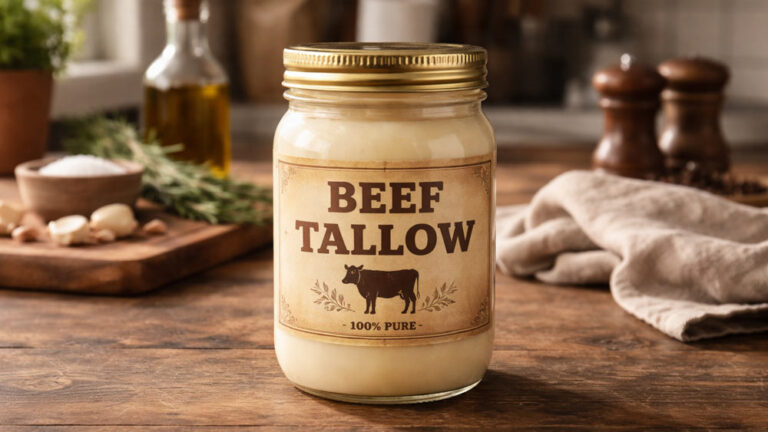
Marketers take a product, like rendered beef fat, and wrap it in the language of our "primal" ancestors. They suggest that because humans ate something 10,000 years ago, it must be the cure for modern disease.
They use fancy words like "tallow," "suet," and "lard" to make a byproduct of the cattle industry sound like an ancient miracle. It feels "raw" and "real," which bypasses your logic and hits your emotions. We’re all tired of processed sugars, so they feed us a different kind of processed, rendered throwaway product and pretend it’s better.
Related: The Tallow Trap: Is Beef Fat Really a “Health Food”?
2 — The "Enemy of My Enemy" Strategy
This is a classic diversion tactic. Marketers point to a legitimate "villain," like chemically processed seed oils, and use that as evidence that the exact opposite must be healthy.
Their logic goes like this: "Because soybean oil is bad, then saturated animal fat must be good." This is a logical fallacy. It keeps you from looking at the middle ground or the actual evidence. Just because one thing is harmful doesn't mean the opposite is a health food.
3 — The "Plant Toxins" Scare
To get you to buy more expensive animal products, some influencers are now branding vegetables as "toxic." They claim things like lectins, oxalates, or phytates are "plant poisons" designed to kill insects, so they must be killing you, too.
This usually comes from two groups:
- Meat-diet marketers who are looking to sell a specific lifestyle.
- Podcasters looking for a "hot take" to get views.
Telling people that fruits and vegetables are bad gives them "permission" to stop eating fiber and phytonutrients – the very things that actually prevent disease.
Related: Oxalates in Food: The Trendy Health Fear That’s Missing the Bigger Problem
4 — The “Slightly Better” Shortcut
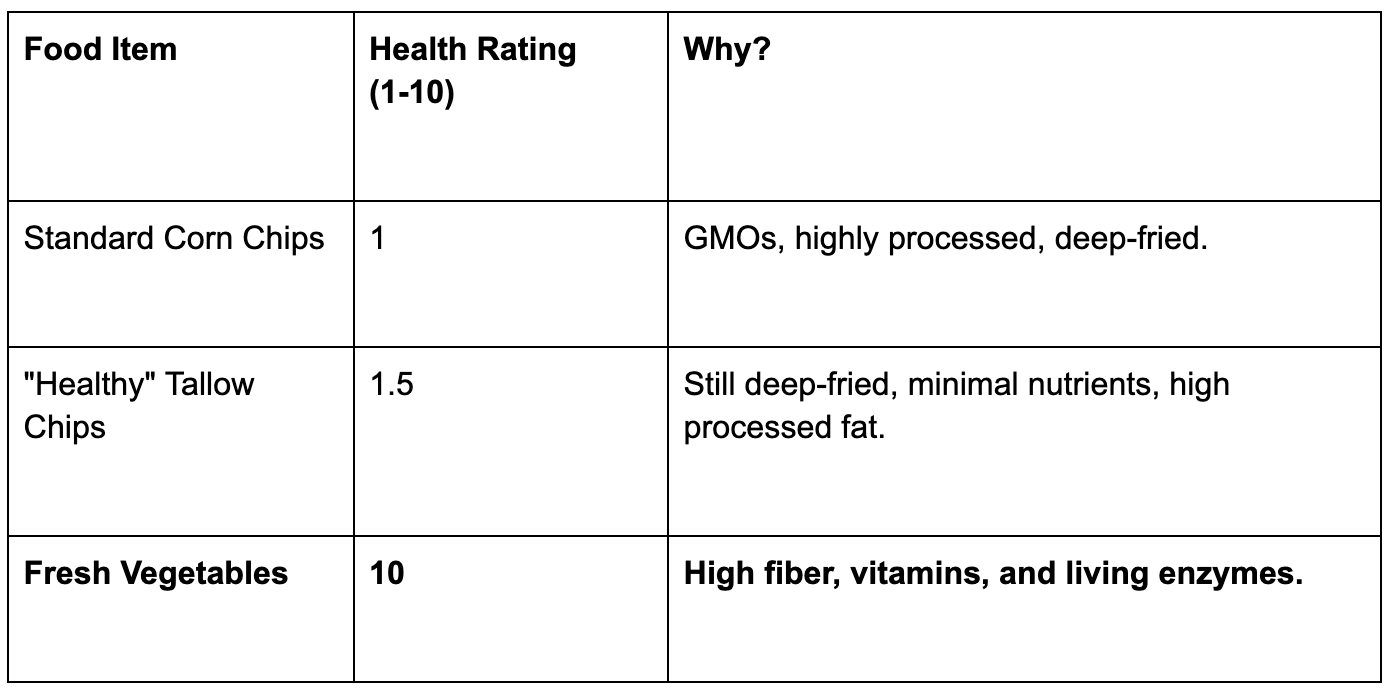
The food industry loves to sell you "paper" health. They take a junk food, like a potato chip, fry it in tallow, and market it as a health food.
Many processed foods are rebranded as healthy, but the nutritional difference is often minimal.
It’s a shortcut that allows you to feel like you’re making a healthy choice without actually changing your lifestyle.
5 — The 15-Year Rebrand
Every 10 to 15 years, the industry recycles the same high-fat, low-carb narrative under a new name. What was Atkins in the 90s became Paleo, then Keto, and is now "Carnivore."
They change the label so they can sell a new set of books and products to the same audience that already tried the old version. Labels like “Whole 30 Approved” or “Keto Approved” come and go. These products are usually highly preserved and have a low cost to make, which is why they are marketed so heavily.
Related: Why the Food Industry Recycles the Same Diet Every 15 Years
What Actually Works for Long-Term Health

Healthy, whole foods are what works best for long-term health!
While fads change every decade, there is a core group of foods linked by thousands of studies to long life and high energy.
These aren't "sexy" or "new," but they work:
- Greens and Vegetables: The foundation of cellular health.
- Fruits and Berries: Nature’s highest source of antioxidants.
- Legumes and Grains: The fiber your gut needs to thrive.
- Nuts and Seeds: Healthy fats and medicinal properties.
How to Avoid Diet Industry Traps
If you're ready to stop falling for health marketing tricks and start following what actually works, these programs will show you how to build a sustainable, whole-food lifestyle.
- 12 Steps to Whole Foods: This is my "anti-diet" program. I developed these 12 high-impact changes to help my own family move from being sick to being high achievers. It includes over 200 recipes to help you opt out of the "Standard American Diet."
- GreenSmoothieGirl Detox: This is the work I am most proud of. My husband and I do the shorter version twice a year. If you think detoxing is just taking a bunch of pills, let me show you a better way. We love to hold your hand through the whole process.
Some links may compensate this small business if they’re one of our products or an affiliate relationship.
 Robyn Openshaw, MSW, is the bestselling author of The Green Smoothies Diet, 12 Steps to Whole Foods, and 2017’s #1 Amazon Bestseller and USA Today Bestseller, Vibe. Learn more about how to make the journey painless, from the nutrient-scarce Standard American Diet, to a whole-foods diet, in her free video masterclass 12 Steps to Whole Foods.
Disclosure: This post may contain affiliate links that help support the GSG mission without costing you extra. I recommend only companies and products that I use myself.
FAQ: Health Marketing & Nutrition Myths
Q: Why do unhealthy foods get marketed as healthy?
Because it’s profitable. Rebranding cheap, processed ingredients as “healthy” allows companies to charge more while keeping production costs low.
Q: What is “forbidden” marketing in nutrition?
It’s a strategy that reframes traditionally unhealthy habits – like eating processed fats or avoiding vegetables – as beneficial or even superior.
Q: Are plant toxins like lectins and oxalates dangerous?
In normal amounts, no. Whole plant foods have been consistently linked to reduced disease risk and longer lifespan.
Q: Why do diet trends keep coming back?
Because rebranding old ideas (like low-carb diets) under new names allows companies to resell the same concept to new audiences.
Q: What foods actually support long-term health?
Whole, plant-based foods like vegetables, fruits, legumes, nuts, seeds, and whole grains consistently show the strongest health benefits.
Posted in: Health Concerns, Holistic Care, Natural Remedies, Preventive Care, Whole Food










No comments found, but you can be our first!