

Oxalates in Food: The Trendy Health Fear That’s Missing the Bigger Problem
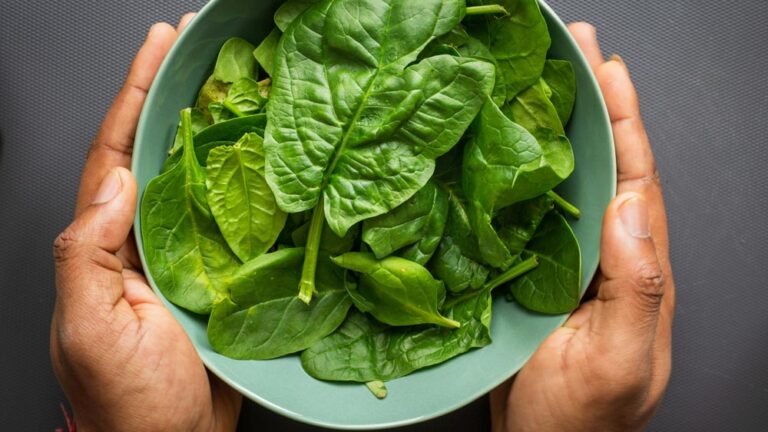
Have you noticed how every few years, the wellness world picks a new "villain" to blame for all our health woes?
First, it was fats, then it was carbs, then lectins – and now, the spotlight has turned to oxalates.
To watch or listen to this blog post instead, click here.
If you’ve been scrolling through social media lately, you’ve likely seen the warnings: stay away from spinach, ditch the strawberries, and be terrified of almonds. But today, I want to cut through the noise.
As someone who has eaten over a pound of greens daily for more than 30 years, I’m here to tell you that the oxalate craze is a "tempest in a teapot" – an overblown narrative that is actually taking people in the wrong direction.
Here's what you'll learn in this article:
- Oxalates in food: Why this old health myth is trending again
- Are oxalates anti-nutrients? The truth about plant compounds
- Do oxalates cause kidney stones? What the research really shows
- My 30-year experiment with greens
- The source of the fear
- The bottom line
Oxalates in Food: Why This Old Health Myth Is Trending Again
While oxalates feel like a "new" discovery, this narrative is actually decades old.
It’s been resurrected and amplified by the social media echo chamber. It’s a classic example of how a fringe theory can go viral without robust scientific backing.
The truth? Data suggests that a tiny fraction of the population – likely less than 1% – is genuinely reactive to oxalates.
Furthermore, the quality of evidence supporting widespread oxalate sensitivity is remarkably poor. We are looking at anecdotal reports and small, uncontrolled studies rather than the gold standard of large-scale clinical trials.
For the vast majority of us, fearing oxalates is simply misdirected energy.
Are Oxalates Anti-Nutrients? The Truth About Plant Compounds
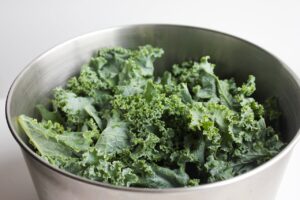
The benefits of whole foods with "anti-nutrients" far outweigh any theoretical downside.
We often hear compounds like oxalates, phytates, and goitrogens labeled as "anti-nutrients." This term is used to demonize the healthiest foods on the planet.
Decades ago, I read a massive 600-page book detailing the evidence that these so-called "anti-nutrients" actually play beneficial roles in the body. These compounds often serve as a plant’s natural defense system, and while they can interact with nutrient absorption, our bodies are incredibly adaptable.
The benefits of these whole foods – packed with hundreds of micronutrients and essential fiber – far outweigh any theoretical downside.
An acidic internal environment, usually caused by a diet heavy in animal products and ultra-processed foods, is a much bigger threat to your health than the oxalates in a bowl of strawberries.
Do Oxalates Cause Kidney Stones? What the Research Really Shows
It’s true that oxalate crystals are often found in kidney stones. But correlation does not equal causation.
When we look at who typically suffers from stones, we see a pattern of obesity, high consumption of processed meats and sugary sodas, and underlying liver or gallbladder dysfunction. These conditions create a "backed up" system where bile becomes thick and sludgy.
Crystalline structures form in acidic conditions. Plant foods, on the other hand, promote an alkaline environment where bile flows easily. The idea that oxalates alone cause these stones is a massive oversimplification.
My 30-Year Experiment with Greens
I don't just talk the talk; I walk the walk. For 30 years, greens have been the crux of my diet.
I’ve seen:
- Gallbladder Success: I’ve coached students who were told they needed surgery, only to save their gallbladders by switching to a 26-day plant-based detox.
- Thyroid Recovery: A close friend avoided radiating her thyroid for hyperthyroidism by focusing on the very whole foods the "oxalate alarmists" tell you to avoid.
These foods provide the "Sponge" (soluble fiber) and the "Broom" (insoluble fiber) that our bodies desperately need. The Standard American Diet is tragically deficient in fiber, and oxalates happen to be found in the very foods Americans eat the least!
Related: Fibermaxxing Done Right: Whole-Food Strategies for a Healthier Gut
The Source of the Fear

For most people, "reactivity" isn't a plant problem; it's a gut and liver dysbiosis problem that can be corrected through lifestyle changes.
Much of the current panic can be traced back to a few vocal individuals who have universalized their personal health struggles.
While their journey is their own, it is scientifically irresponsible to take one person's unique reactivity – often caused by rare genetic conditions or severe gut dysbiosis – and tell the entire world to stop eating spinach.
For most people, "reactivity" isn't a plant problem; it's a gut and liver dysbiosis problem that can be corrected through lifestyle changes.
The Bottom Line
Stop worrying about the "anti-nutrients" in your kale. The real culprits of our health crisis are ultra-processed foods and an over-reliance on animal products. Don’t let a trendy bogeyman distract you from the vibrant health that comes from a plant-rich life.
Take the Next Step in Your Health Journey
If you’re ready to cut through the confusion and get back to basics, I’d love to have you in Insiders Health Coaching. We don't just talk about food; we look at the whole picture.
Special Offer for My Readers:
- Get a FREE third month of access when you sign up for two months.
- Access five deep-dive courses on: Biological Dentistry, Natural Hormone Treatment, Lowering EMFs, Breast Imaging, and more.
- Join me for a Live Monthly Q&A Class.
- Extra $50 Off: Use coupon code COACH at checkout.
 Robyn Openshaw, MSW, is the bestselling author of The Green Smoothies Diet, 12 Steps to Whole Foods, and 2017’s #1 Amazon Bestseller and USA Today Bestseller, Vibe. Learn more about how to make the journey painless, from the nutrient-scarce Standard American Diet, to a whole-foods diet, in her free video masterclass 12 Steps to Whole Foods.
Disclosure: This post may contain affiliate links that help support the GSG mission without costing you extra. I recommend only companies and products that I use myself.
FAQ: Oxalates in Food
Are oxalates bad for you?
For the vast majority of people, oxalates are not harmful. In fact, they’re naturally found in many of the healthiest plant foods like leafy greens, berries, nuts, and seeds.
While oxalates can bind to certain minerals, a balanced, whole-food diet provides far more benefits than risks. Only a small percentage of people with specific conditions need to limit them.
Do oxalates cause kidney stones?
Oxalates are often found in kidney stones, but that doesn’t mean they are the root cause.
Kidney stones are typically linked to a combination of factors like dehydration, high intake of processed foods, excess sodium, and poor metabolic health. Focusing only on oxalates oversimplifies a much more complex issue.
Should I avoid spinach because of oxalates?
For most people, no.
Spinach is one of the most nutrient-dense foods available, packed with vitamins, minerals, and phytonutrients. Avoiding it out of fear of oxalates may actually do more harm than good by reducing your intake of essential nutrients and fiber.
Are “anti-nutrients” like oxalates something to worry about?
The term “anti-nutrient” is often misleading.
Compounds like oxalates, phytates, and lectins can have beneficial roles in the body, including antioxidant activity and supporting cellular health. The fear around them is largely overblown, especially in the context of a whole-food, plant-rich diet.
Posted in: Health Concerns, Whole Food











What about too much cadmium found even in organic spinach?