Holistic Ways to Protect Your Eyes: Easy Daily Habits for Lifelong Vision
Eye health isn’t something most people think about – until it’s gone, or going.
If you're interersted in holistic eye health, here's what you'll discover in this article:
- A family history of vision loss – and a different way forward
- Why I stopped accepting "normal" vision decline
- Why modern life is so hard on our eyes
- A simple habit for protecting your eyes
- How to protect your eyes before using supplements
- Best foods for eye health
- The Bates Method: a different way of thinking about vision
- Bates practices to naturally improve eyesight
- Light and eye health
- Do supplements improve eye health?
A Family History of Vision Loss — and a Different Path Forward
In my family, vision loss runs deep. Both my mother and grandmother went blind. My two oldest children have strong corrective-vision prescriptions.
We have just accepted in our culture that this is normal, and that when we can’t see, we go to the optometrist and get glasses.
I’m turning 59 in the next few weeks, and still don’t have prescription lenses, nor do I need “readers.” Despite having a full-time career for 20 years on a computer screen.
Why I Stopped Accepting ‘Normal’ Vision Decline
So, why? I’ve been trying to figure that out and researching holistic approaches to eye health.
What’s really strange about my story is that when I was 20, I couldn’t see the chalkboard very well in college.
I visited an optometrist and got glasses during my sophomore year. However, I never wore them. I’ve seen my eyes weaken and then re-strengthen a few times in my life. Isn’t that interesting? NOBODY talks about this. But it’s my personal experience.
Watching my mother go blind has made me think more about what can be done, preventatively, as we assume surgical and corrective-lens approaches are the only ones.
And it’s made me wonder what I’ve done right (or was I just lucky?) that my vision got BETTER, from age 20, to age 59?
My theory is that it was a combination of radically changing my diet, half my life ago, for other reasons related to my health. And specifically, my breakfast for 30 years full of carotenoid antioxidants, which I share below. And just not using the “crutch” of the glasses I was prescribed.
I can’t prove that’s why I’ve lived my whole life without vision correction, but it’s my working theory after a lot of research.
What if we could keep our vision, better and longer, with some simple practices and dietary tweaks?
There is an eye surgeon from 100 years ago who, very controversially, had a natural, preventive approach to eye health – whose philosophies and recommendations may be why I had prescription glasses at 20, and then perfect vision at 40 with no medical intervention.
His approach, Dr. Bates of 100 years ago, plus research since then, leads me to believe specific classes of whole foods, gentle light exposure, and daily habits that support the eyes as living tissue, not isolated organs, really made a difference for me, and others might learn from.
Why Modern Life Is So Hard on Our Eyes

In our modern world, non-stop close-up focus may be impacting our eye health.
Today, our eyes are under constant stress from screens, artificial lighting, and I think this one is actually a much bigger deal than blue light (subscribe to my YouTube channel for an upcoming video questioning this) – nonstop close-up focus may be the much bigger issue.
Just far too much strain on the eyes of staring at screens, uninterrupted and without rest.
During lockdowns, eye doctors compared our screen use to “running marathons without training.”1 Meetings, work, entertainment, and social connections all moved onto screens overnight.
When we stare at screens too long:
- We blink less
- Our eyes dry out
- Oil glands in the eyelids become stressed
- Eye strain quietly accumulates
A Simple, Doctor-Recommended Habit for Protecting Your Eyes
One simple habit doctors recommend is the 20-20-20 rule:
Every 20 minutes, look 20 feet away for at least 20 seconds. (Personally, I think over-fixating on a screen for 20 minutes is way too long. More like every 5 minutes, I look away at the scenery outside.)
Even better? Step outside. Natural light and distance vision are exactly what your eyes were designed for. I tilt my face toward the sun and close my eyes – unless it’s sunrise or sunset, when I can comfortably look at the sun for 20 or 30 seconds at a time.
How to Protect Your Eyes Before Using Supplements
Before we talk about nutrients or supplements, protection comes first.
Protecting your eyes naturally includes:
- Wearing UV-protective sunglasses outdoors
- Taking frequent breaks from screens
- Blinking intentionally when working
- Getting regular eye exams, especially if eye disease runs in your family
You can’t supplement your way out of vision problems. Eye health starts with daily care.
My new book, Take Daily, shows how vitamin A and “beta-carotene” supplements aren’t whatsoever what is found in food, and actually quite toxic according to the studies that were originally done, hoping to show how great those supplements were!
Best Foods for Eye Health (Nature’s Original Supplements)
Your eyes are living tissue. They respond directly to what you feed your body every day.
1 — Dark Leafy Greens for Eye Health
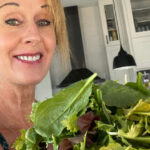
Leafy greens, such as kale, spinach, collards, and Swiss chard, are rich in natural compounds, like lutein and zeaxanthin, that help protect the retina from oxidative stress.
If you drink green smoothies regularly, you’re already supporting long-term eye health.
[Related: Top 11 Greens to Use in Your Green Smoothies]
2 — Healthy Fats Support Vision and Moisture
The eyes rely on healthy fats to stay lubricated and to absorb fat-soluble nutrients.
Flax seeds are one of the easiest ways to support eye health naturally.
Our high-quality sprouted products give you flax seeds (and other seeds) that are rich in healthy-fat omega-3s. Plus, they are ground for you, making them easy to use in green smoothies, salads, oatmeal, and more.
Nuts, such as pecans, almonds, and walnuts, provide vitamin E in the form your body recognizes best and beneficial fats that support eye tissue and circulation.
My book Take Daily has a chapter on the fish-oil scam, that we were sold for decades as helping us get Omega-3’s – and we didn’t do an entire chapter on vitamin E, but it is also rancid oil (with the rancidity masked by deodorizer chemicals) by the time you use it.
3 — Whole Foods That Are Rich in Antioxidants
Deeply colored fruits and vegetables supply antioxidants, like vitamin C, beta-carotene, and polyphenols, which help protect eye tissue from oxidative aging.
Excellent options include:
- Blueberries
- Purple cabbage
- Beets
- And other richly pigmented fruits and veggies
Dark chocolate (70% cacao or higher) also deserves a mention. It contains flavanols — powerful antioxidants that support blood flow and protect delicate retinal tissue.
Improved circulation helps deliver oxygen and nutrients to the retina, which becomes increasingly important as blood flow naturally declines with age.
In small, regular amounts, high-quality dark chocolate may support visual sensitivity and overall eye resilience as part of a nutrient-dense, whole-foods approach.
4 – I Think My Hot Pink Breakfast Smoothie Did It!
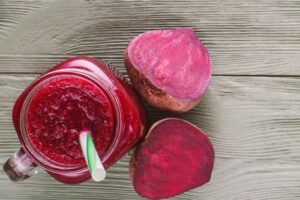
The #1 most loved recipe in the GreenSmoothieGirl audience for almost 20 years!
I have eaten this one specific breakfast, 95% of the time, for nearly 30 years. It has beets and a big, whole carrot. It’s in my breakfast, and the smoothie is actually delicious. Everyone who tries it loves it.
I think, with all the known benefits of carotenoid antioxidants, this may be half of why I still have good vision, when virtually everyone my age doesn’t (and my family has extra-poor vision).
Beets and carrots are some of the most carotenoid-antioxidant-rich foods we have.
Here’s the recipe for my Hot Pink Breakfast Smoothie (the #1 most loved recipe in the GreenSmoothieGirl audience for almost 20 years!).
5 — Fulvic & Humic Minerals: The Missing Link in Nutrient Absorption
Even the most nutrient-dense foods only help if your body can actually absorb and use what you’re eating.
That’s where high-quality fulvic and humic minerals come in.
Fulvic acid may support eye health indirectly by helping the body better absorb and transport key nutrients the eyes rely on, including:
- Zinc – essential for retinal function and antioxidant defense
- Magnesium – supports circulation and nervous system signaling
- Iron – helps deliver oxygen to eye tissue
Fulvic and humic substances also support:
- Balanced inflammation throughout the body
- Mitochondrial function (how cells create energy)
- Antioxidant activity at the cellular level
This matters because minerals, like zinc, and antioxidants are well-established for eye health. Fulvic acid doesn’t replace them; it helps them get where they need to go.
That’s why I recommend our bestselling Ultimate Minerals for eye health. Taking these minerals daily gives you naturally occurring fulvic and humic minerals in a form the body recognizes, supporting nutrient absorption as part of a whole-food, whole-body approach to health.
This isn’t about targeting the eyes in isolation. It’s about supporting the internal terrain that allows your eyes to thrive over time.
Eat for Whole-Body Health to Support Vision
Eye health doesn’t exist in isolation.
Blood sugar balance, inflammation, digestion, and circulation all affect the eyes over time. When you eat real food daily, your eyes benefit naturally.
[Related: 7 Foods I Eat Daily to Maintain Great Health]
The Bates Method: A Different Way of Thinking About Vision
And then, I think NOT wearing my glasses (because I didn’t like them – I really hated the contact lenses I bought, in the beginning, and never wore them either) – accidentally helped strengthen my eyes.
I’m not telling anyone else not to wear their glasses. When eye doctor Dr. Bates promoted that, 100 years ago, he got big pushback!
There are tens of thousands of people in the industry that does surgical and corrective-lens approaches to loss of eyesight. They do not love the holistic approach of Dr. William Bates–not then, and not now. They have no interest in you learning to protect your vision naturally.
Some people are not able to see without their glasses, of course, and so nobody needs to feel bad about wearing them. I just wonder if, early in my own saga, I didn’t wear mine, and my eyes corrected to perfect vision at age 40.
By then, I was 13 years into radically changing my diet and was eating a whole-food, plant-based diet for over a decade.
If I’m right, and my eyes naturally strengthened due to dietary changes, getting in the sun, and resting my eyes during the day a few times, plus not using the “crutch” of the glasses–
–then perhaps everyone, even well into the process of having weakened eyesight, could slow the degeneration down?
What Is the Bates Method? — and Practices to Try

I tilt my face toward the sun and close my eyes – unless it’s sunrise or sunset, when I can comfortably look at the sun for 20 or 30 seconds at a time.
The Bates Method was developed in the early 20th century by ophthalmologist William H. Bates, who believed that eye strain and mental tension were the primary causes of poor vision.
Bates theorized that by relaxing the eyes and cultivating better visual habits, people could naturally improve their eyesight – even reversing common refractive errors like myopia, hyperopia, and astigmatism.
His approach includes things like relaxation techniques, eye movements, and visualization practices.
Common Bates practices include:
- Palming — covering the eyes with the palms to block light and encourage relaxation.
- Sunning — exposing eyes to light or the sun (a controversial and potentially dangerous technique if you’re staring at the sun–he recommended closing your eyes as you turn your face to the sun, or even looking toward it on a cloudy day).
- Visualization and Central Fixation — imagining clear images and focusing attention on a single point.
Light and Eye Health: Finding the Balance
Light isn’t the enemy – but timing and exposure matter.
I personally practice very brief, mindful sun exposure, always listening to my body and never forcing anything. This is about honoring how the eyes were designed to interact with natural light.
When it comes to eyes, gentle and brief is always better than aggressive.
Do Supplements Improve Eye Health?
Most doctors will tell you supplements don’t “fix” eyesight – and I agree.
For most people, food-based nutrition does the real work.
Your body knows what to do with nutrients when they come from real food.
Natural Eye Care: If Macular Degeneration Runs in Your Family
If eye disease runs in your family, the best time to support your eyes is now.
Focus on:
- Daily greens
- Healthy fats
- Less screen strain
- More natural light
- Consistent nourishment
- Healthy eye practices, like the Bates method techniques
This isn’t fear, nor is it a medical claim or a guarantee – it’s taking stewardship of our own health, the best we can, especially in easy ways like these.
Frequently Asked Questions
What are the best foods for eye health?
Dark leafy greens, flax seeds, nuts, seeds, and whole foods rich in antioxidants and healthy fats are among the best foods for supporting eye health naturally.
Can you improve eye health naturally?
You can support and protect eye health naturally through diet, reducing screen strain, protecting your eyes from UV light, and maintaining overall metabolic health.
Is vitamin E good for eye health?
Vitamin E supports eye tissue integrity and protects cells from oxidative stress. It’s best obtained from whole foods like nuts, seeds, and greens.
Final Thought
Your eyes are precious. They are not separate from the rest of your body.
When you nourish yourself with real food, natural light, and daily rhythms, your whole body and your mood benefit–and your eyes know exactly what to do.
 Robyn Openshaw, MSW, is the bestselling author of The Green Smoothies Diet, 12 Steps to Whole Foods, and 2017’s #1 Amazon Bestseller and USA Today Bestseller, Vibe. Learn more about how to make the journey painless, from the nutrient-scarce Standard American Diet, to a whole-foods diet, in her free video masterclass 12 Steps to Whole Foods.
Disclosure: This post may contain affiliate links that help support the GSG mission without costing you extra. I recommend only companies and products that I use myself.

References
- Camero, K. (2022). How The Pandemic Is Changing Our Bodies. BuzzFeed News. https://www.buzzfeednews.com/article/katiecamero/pandemic-body-changes

Posted in: Green Smoothies, Health Concerns, Lifestyle, Natural Remedies, Preparedness, Preventive Care, Whole Food