

The Wellness Industrial Complex: 6 “Healthy” Trends That Are Draining Your Wallet
For nearly two decades, I’ve helped people navigate the murky waters of the "Big Pharma" complex. We’ve known for a long time that the system is broken.
But today, I want to turn the lens toward a different billion-dollar giant – one that wears a yoga outfit and carries a glass of green juice in its ads, and targets the health-conscious consumer with relentless precision.
I’m talking about the Wellness Industrial Complex.
To watch or listen to this blog post instead, click here.
Here's what you'll discover in this article:
- What is the Wellness Industrial Complex?
- 6 Wellness industry scams to watch out for
- How to actually improve your health (without the hype)
What Is the Wellness Industrial Complex?
You might not hear that term, like you do the "Military Industrial Complex," or the “Pharmaceutical Industrial Complex,” but it functions the same way. My observation is that many women believe, “If it’s pharma, it’s bad, and if it’s an alternative, it’s good.”
It may not be that simple.
It’s a massive web of marketing verticals, social media influencers, alternative practitioners, and endless product lines, designed to drain your bank account without necessarily moving the needle on your health.
We’ve traded pharmaceutical pills for what we may believe are "natural" powders and gadgets that are, in many cases, just as predatory.
Your kitchen counters are cluttered with bottles, and your nightstand is overflowing with tech you’ve been told you need to survive a toxic world.
More, more, more ads fill your social media feed, offering you yet another “hack” toward better health. If you’re like me, you hit a point where you ask yourself if all the money you’ve spent is even helping your health.
So many of us use devices or take pills, thinking, “I may not feel better, but for all I know, if I weren’t taking these, I’d feel worse!”
6 Wellness Industry Scams to Watch Out For
It’s time to develop the critical thinking skills to sift through the noise.
I’m going to run through what, in my opinion, are the 6 biggest "health" scams currently being sold as wellness essentials.
1. Collagen Supplements: The "Expensive Jello" Trap
Collagen is the darling of Instagram. Whether it’s powders, creamers, or gummies, people are dropping $50 a tub for the promise of youthful skin and strong joints.
The Reality: Your body cannot absorb collagen whole.
When you swallow that powder, your digestive system breaks it down into individual amino acids, just like it would a piece of chicken or a bowl of lentils. Your body doesn't "know" to send those specific amino acids to your forehead wrinkles; it sends them wherever the metabolic priority is, like your liver or your toenails.
The Data: Most "gold standard" studies showing collagen works are funded by the companies selling it.
Independent research confirms that if you eat adequate protein (which you can get entirely from plants, because your body assembles proteins from their amino acids) – your body already has the tools to build its own collagen.
You aren’t buying "young skin.” You’re buying overpriced, incomplete protein. Usually with a side helping of byproducts of industrial chemicals used in the manufacturing, and sweeteners, texturizers, and flavorings.
[Related: Why Collagen Doesn’t Do What You Think]
2. Cheap Red-Light Devices: The LED Illusion
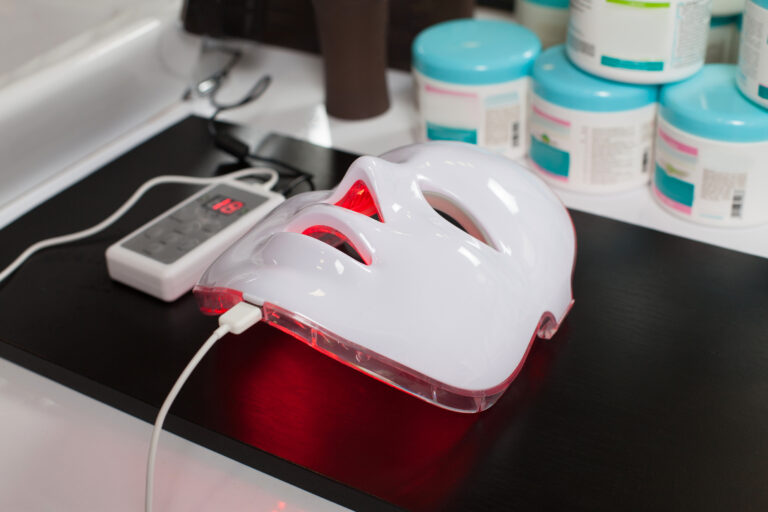
I’ll be the first to admit: I fell for this one. I briefly promoted red-light masks and hats until I dug deeper into the clinical evidence.
Real therapeutic red light (photobiomodulation) is a legitimate science, but the "scam" is in the delivery.
The Reality: Most consumer-grade devices are essentially Christmas lights in a fancy plastic shell. To penetrate the dermis and create a biological change, you need specific wavelengths (usually 660nm and 850nm) and high irradiance (power).
In my own 30-day experiment with a high-powered device, the only thing it did was "pop out" pre-malignant spots on my face that had been dormant. While some people enjoy the "ritual" of the light (the placebo effect is a powerful thing), most home gadgets are statistically insignificant compared to clinical-grade panels.
3. Blue-Light Blockers: A Solution Looking for a Problem

Digital eye strain isn’t caused by blue light. It’s caused by the fact that we blink 60% less when staring at a monitor.
"Protect your eyes from the digital screen!" is a powerful narrative for anyone who works at a computer.
The Reality: According to a massive Cochrane Systematic Review of 17 randomized controlled trials, there is no significant evidence that blue-light-filtering lenses reduce eye strain or improve sleep quality.
Digital eye strain isn’t caused by blue light. It’s caused by the fact that we blink 60% less when staring at a monitor.
You don't need $150 glasses. You need the 20-20-20 rule: every 20 minutes, look at something 20 feet away for 20 seconds. It’s free, and it actually works.
4. Ascorbic Acid: The Vitamin C Imposter
If your vitamin C supplement list begins and ends with "ascorbic acid," you don't have vitamin C. You have the chemical envelope of it.
The Reality: In nature, vitamin C is a complex of factors – rutin, bioflavonoids, and various enzymes. Ascorbic acid is just the antioxidant shell.
Most commercial ascorbic acid is synthetic, derived from GMO corn sugar and processed with volatile acids and petrochemical solvents.
While it can prevent scurvy, it doesn't provide the full-spectrum biological activity of whole-food citamin C found in acerola cherries, rose hips, or – better yet – fresh fruits and vegetables.
5. Cholecalciferol: The "D" Hormone Danger
We call it vitamin D, but it’s actually a secosteroid hormone. The "vitamin D3" you buy at the store is often a byproduct of sheep’s wool grease treated with UV radiation.
The Reality: Taking high-dose D3 in isolation can be risky.
It can signal your body to pull calcium out of your bones and deposit it into your soft tissues, like your heart and kidneys (calcification).
The wellness industry sells D3 like candy, but without its natural co-factors (like K2 and Magnesium found in whole foods), you might be doing more harm than good.
Furthermore, the standard 25,D lab test most doctors use is a poor indicator of your actual hormone status unless paired with a 125,D test.
6. The Carnivore Diet: The Ultimate Elimination Deficit
The "Carnivore Diet" is the ultimate anti-health trend. People often feel better initially because they’ve cut out processed sugar and seed oils – this is the "Elimination Effect."
The Reality: You aren't "eating like your ancestors." You're walking into a nutritional minefield.
Long-term risks include a decimated gut microbiome due to zero fiber and increased oxidative stress from a lack of phytonutrients. We are seeing LDL levels skyrocket in this community. It is a state of chronic inflammation masquerading as a "hack."
[Related: The Carnivore Diet: 11 Bizarre Claims of the All-Meat Diet]
How to Actually Improve Your Health (Without the Hype)
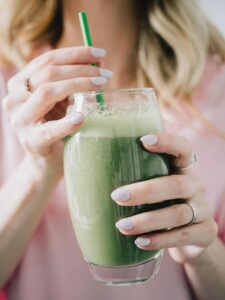
Leaning on whole, plant-based foods, real sunlight, movement, quality sleep, and avoiding toxins is where the body actually repairs itself.
The common thread here? Simple, cheap solutions don’t sell $35 billion in supplements.
The wellness industry wants you to believe you can "buy" your way out of poor lifestyle choices with a powder or a gadget.
The truth is much less profitable for them: leaning on whole, plant-based foods, real sunlight, movement, quality sleep, and avoiding toxins is where the body actually repairs itself.
Be skeptical, stay grounded, and remember that your health is built in the kitchen and the sunshine, not in a marketing funnel.
Ready to stop the guesswork and start a real reset?
If you want to move the needle without the hype, I invite you to join our GreenSmoothieGirl Detox.
In my nearly two decades sharing my research and writing 17 books, this program we’ve helped 20,000 people do is the most important thing I’ve ever done, and the biggest needle-mover for your health and mine. Detoxing saved me, and dug me out of a hole I was in, in the 4 years I spent mostly in bed, from age 28 to 32.
It’s the most high-impact, focused action you can take for your health in less than a month.
 Robyn Openshaw, MSW, is the bestselling author of The Green Smoothies Diet, 12 Steps to Whole Foods, and 2017’s #1 Amazon Bestseller and USA Today Bestseller, Vibe. Learn more about how to make the journey painless, from the nutrient-scarce Standard American Diet, to a whole-foods diet, in her free video masterclass 12 Steps to Whole Foods.
Disclosure: This post may contain affiliate links that help support the GSG mission without costing you extra. I recommend only companies and products that I use myself.
Posted in: Health Concerns, Natural Products, Natural Remedies, Preventive Care, Tools & Products









No comments found, but you can be our first!