

Fancy Salt: Pretty in Pink, But Is It Healthier?
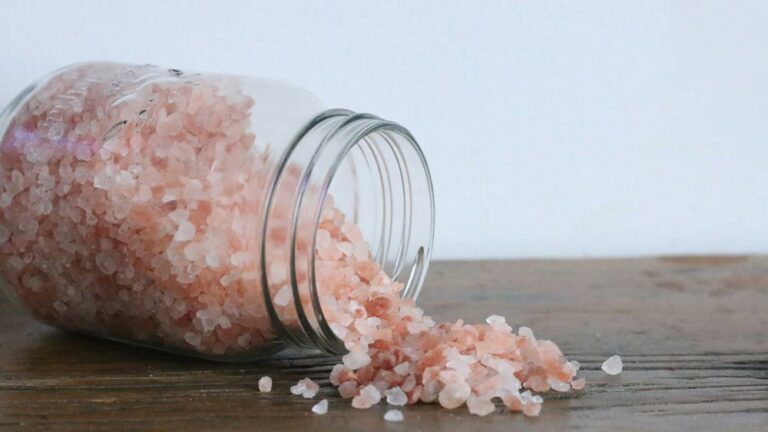
Some of you are paying $60 a pound for salt. I doubt you want to if it’s not actually better.
Himalayan pink salt is marketed as healthier, more natural, and packed with minerals. But is it actually better than cheap iodized table salt?
Let’s break down Himalayan pink salt vs table salt — what’s marketing, what’s science, and whether you even need added salt at all.
If you prefer, you can listen to or watch this article instead of reading.
Here's what you'll find in this article:
- What does "less processed" salt actually mean?
- Himalatan pink salt vs table salt: what's the difference?
- The real question: do you need salt at all?
- Is fancy salt just marketing?
- Road salt vs food salt
- The bottom line on salt and health
Why Are There So Many Salts?
Have you ever walked into a grocery store and seen all sorts of salts that aren't just plain white table salt?
There's pink salt, grey salt, and black salt. And they all claim to be "better for you" because they're "less processed."
But what does that really mean? Let's find out!
What Does “Less Processed” Salt Actually Mean?
When companies say a salt is "less processed," they usually mean it hasn't been stripped of all its natural minerals.
Regular table salt is heavily processed. It's cleaned, and all the other minerals are removed, leaving almost pure sodium chloride.
Then, anti-caking agents are added to stop it from clumping, and sometimes iodine is added, which is a synthetic version I’m not at all convinced everyone is deficient in (another popular narrative, whole books written about it). Plus, I’d rather use a different source than iodized salt.
"Less processed" salts, like sea salt or pink Himalayan salt, are usually just dried or ground up. They keep some of their natural minerals, which gives them different colors and sometimes different flavors.
Real Salt is a not-very-expensive, fairly unrefined salt from Southern Utah whose management I used to know.
I’m not convinced you have to go to the Himalayas for the best salt, or that it really matters for your health.
Himalayan Pink Salt vs Table Salt: What’s the Difference?
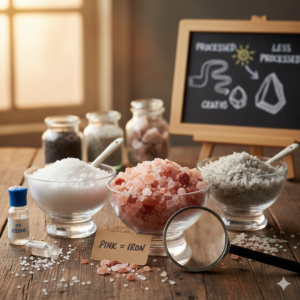
While minerals may be present in fancy salts, the amount is usually very, very small.
Many people think that if salt is pink, it must have a lot of healthy minerals in it.
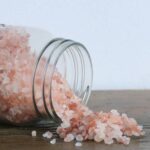
It's true that pink salts, like Himalayan salt, get their color from tiny amounts of minerals, especially iron.
Iron is a mineral your body needs – it’s not always a heavy metal. (There are different compounds.)
While these minerals are present, the amount is usually very, very small. You would have to eat a huge amount of pink salt to get a significant amount of these extra minerals.
The Real Question: Do You Need Added Salt At All?
You're better off getting your minerals from fruits, vegetables, and other healthy foods. And adding minerals to your drinking water because our food is lacking in minerals, not vitamins.
Adding salt to water and drinking it, or adding it to food, really shouldn’t be necessary. Yes the body needs sodium, but not sodium chloride in any amount.
There’s lots of controversy about whether to eat low-sodium (really low sodium-chloride). And the Carnivore Diet people are telling people to just eat beef and salt.
The only things I agree with the Carnivore Diet people about are that we both think everyone should ditch refined processed carbs. And, I can see how if you have a very damaged gut lining, many people are reactive to even healthy fruits and vegetables. Eating all meat could give you space to heal, while it is also highly likely to cause constipation, bad breath, and long-term, increase disease risk.
[Related: 11 Bizarre Claims of the All-Meat Diet]
Also, most people feel worse instead of better on the all-meat diet. Unless they’re coming off a processed Standard American Diet. Where you adopted a bad diet, ditching an even worse one.
Really, what your body needs is sodium, the tissue binder, found in lots of vegetables and plant foods. And that is all you need. I don’t even own a salt shaker except for when we have company.
Is Fancy Salt Just Marketing?
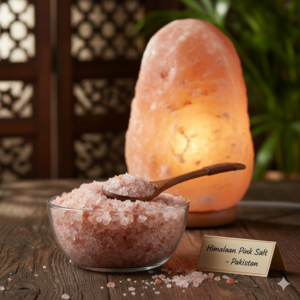
Himalayan pink salt contains small amounts of minerals, like iron, potassium, and magnesium.
Let's look at some popular "less processed" salts:
- Himalayan Pink Salt: This salt comes from ancient salt mines in Pakistan. It's famous for its beautiful pink color. It contains small amounts of minerals like iron, potassium, and magnesium. People like to use it for cooking, finishing dishes, and even in salt lamps.
- Sea Salt: This salt is made by evaporating seawater. It comes in different forms, from fine grains to large flakes. The minerals it contains depend on where the seawater came from. Sea salt often has a slightly different flavor from table salt.
- Celtic Sea Salt: This is a type of sea salt harvested off the coast of France. It's usually greyish in color because it's collected by hand and retains more moisture and minerals from the clay it's harvested on.
Road Salt vs. Food Salt
You might have heard scary stories about companies selling road salt as food. Road salt, which is used to melt ice on roads, is definitely not safe to eat. It can contain harmful impurities and chemicals.
However, there’s no evidence that companies are secretly getting cheap road salt from the Himalayas and selling it as food salt.
The salt used for road treatment is generally mined in different areas and processed differently. Food-grade salts go through strict checks to make sure they are safe for people to eat.
There are different standards for food salt and road salt. So, you don't need to worry about accidentally eating road salt when you buy a bag of Himalayan pink salt from a reputable store.
The Bottom Line on Salt and Health
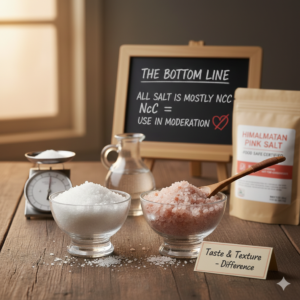
Ultimately, salt is salt, and it's important not to eat much of it, no matter what kind it is.
So, are "less processed" salts truly healthier? While they do contain trace amounts of minerals that table salt doesn't, the health benefits from these tiny amounts are probably not very significant.
The biggest difference is often in the taste and texture, which can add a nice touch to your cooking.
Ultimately, salt is salt, and it's important not to eat much of it, no matter what kind it is. All salts, whether fancy or plain, are mostly sodium chloride, and too much sodium can be bad for your heart.
I cannot find any studies comparing the health outcomes of the consumption of processed iodized salt to those of unrefined salt.
I hope this helps, and I hope it helps you let go of the current fad to salt your food. I’m amazed anyone can do this and not wake up with puffy fingers, like I do, even if I eat chips or pretzels at night. To me is a clear sign I’m not meant to eat especially refined sodium chloride.
 Robyn Openshaw, MSW, is the bestselling author of The Green Smoothies Diet, 12 Steps to Whole Foods, and 2017’s #1 Amazon Bestseller and USA Today Bestseller, Vibe. Learn more about how to make the journey painless, from the nutrient-scarce Standard American Diet, to a whole-foods diet, in her free video masterclass 12 Steps to Whole Foods.
Disclosure: This post may contain affiliate links that help support the GSG mission without costing you extra. I recommend only companies and products that I use myself.
FAQ: Himalayan Pink Salt vs Table Salt
Is Himalayan pink salt healthier than table salt?
Not significantly. It contains trace minerals, but in amounts too small to meaningfully impact health.
Does pink salt contain iron?
Yes, trace amounts — which give it its pink color — but not enough to affect iron status.
Is iodized salt necessary?
It can help prevent iodine deficiency, but iodine can also be obtained from whole food sources.
Is sea salt better for blood pressure?
No. All salts are primarily sodium chloride and affect blood pressure similarly.
Posted in: Health Concerns, Lifestyle, Whole Food










No comments found, but you can be our first!