

The Peptides Controversy: Are They “Natural”— Or Just Rebranded Drugs?

Dear Robyn: What are peptides? Are they safe? Do they work?
Let’s talk about peptides – and the massive shift happening as the pharmaceutical industry positions itself to capture the “wellness” and “biohacking” markets.
You’ve probably heard about peptides:
- On health podcasts
- In gym locker rooms
- In sleek online ads selling tiny vials with big promises
But what are they, really?
If you prefer, you can listen to or watch this article here.
Here's what you'll discover in this article:
- What are peptides?
- Why "peptides" sound safer than "drugs"
- The peptide lottery: why results vary so much
- Regulation and the FDA crackdown
- Why do they need the new word?
- Peptides under increased scrutiny
- The "research only" loophole
- The deception of the "research" label
- So... breakthrough or rebrand?
- Want help navigating the noise?
What Are Peptides?
Is "peptide" just a clever rebrand for an industry that desperately needed a makeover? Is "a rose by any other name" still a pharmaceutical with pharmaceutical risks?
Technically, peptides are short chains of amino acids – smaller than proteins.
That sounds harmless. Even beneficial.
And that’s exactly the point.
By using the word peptide, companies tap into something that feels:
- Biological
- Natural
- Familiar
After all, your body already uses peptides like insulin and oxytocin.
The narrative goes like this:
“Your body is made of proteins. Proteins are made of peptides. Therefore, peptides aren’t drugs – they’re just natural messengers.”
It’s a compelling story.
But it’s also incomplete.
The Rebrand: Why “Peptides” Sound Safer Than “Drugs”
Is “peptide” sometimes just a more appealing word for “pharmaceutical”?
Here’s the uncomfortable question:
Is “peptide” sometimes just a more appealing word for “pharmaceutical”?
If something is:
- Synthesized in a lab
- Designed to alter biological signaling
- Capable of systemic effects
…it may function very much like a drug, regardless of what it’s called.
The term peptide can soften perception.
It creates psychological distance from words like:
- Drug
- Medication
- Pharmaceutical
Words that many people now associate with:
- Side effects
- Dependency
- Past public health crises
The fact is, most current drugs qualify as peptides, including one of the earliest ones, insulin!
But here’s the rub: Just because something is a "messenger" doesn't mean it isn't a drug. A text message is a messenger, but if a stranger sends a "text" to your front door lock to open it, that’s a hack.
Many of the substances being sold today are highly synthetic, lab-altered, and designed to force a biological response that your body isn't currently asking for. And may cause you harm.
The Peptide Lottery: Why Results Vary So Much
Now, I want to be very clear here, because I know many of you listening may have used substances like BPC-157 for joint repair or gut issues. I’ve spoken to people who swear by one of those – people who were in debilitating, mind-blowing pain and finally found a window of relief.
If you are in that kind of pain, I have nothing but sympathy for you.
If I were in that position, I’m sure I’d be looking at every vial and every "research chemical" available, too. I would never want to diminish the lived experience of someone who finally found a way to walk without a limp or sleep through the night.
However, I hope you’re willing to come with me to look at the broader data. In my own research and coaching, I’ve seen the "Peptide Lottery."
In real-world use, results are inconsistent.
Some people report:
- Significant pain relief
- Faster recovery
- Improved function
Others experience:
- No results
- Wasted money
- Unpredictable effects
Why?
Because when you override the body’s signaling systems, outcomes are rarely uniform.
This creates:
- Short-term wins for some
- No benefit – or unknown risk – for others
Why? Because when we use "rebranded drugs" to bypass the body’s internal wisdom, the results are rarely predictable.
Regulation and the FDA Crackdown

If a substance is synthesized in a lab, designed to alter your cellular signaling, and carries a risk of systemic side effects, it’s a drug.
There is a war raging right now for control of this class of substances.
On one side, you have the "herbal" or truly biological peptides – compounds found in nature that have been used for centuries. On the other side, you have the "Synthetic Frontier."
The FDA has recently started cracking down on many of these substances, moving them into "Category 2," which essentially makes them harder for compounding pharmacies to produce.
Why? Because Pharma knows how valuable these are financially if they can patent them. If they can call it a "peptide" and sell it to the wellness community, they can bypass the "Old Pharma" stigma while charging "New Pharma" prices.
It’s a "rose by any other name" scenario.
If a substance is synthesized in a lab, designed to alter your cellular signaling, and carries a risk of systemic side effects, it’s a drug. Calling it a "peptide" is often just a way to make it sound as safe as a protein shake.
Changing The Vocabulary
Why do they need the new word?
Because the old words – pharmaceutical, medication, drug – are heavy with the weight of the opioid crisis and fen-phen and the reality of iatrogenic harm.
When you hear "peptide," you think vitality. When you hear "drug," you think side effects.
By rebranding these compounds, the industry creates a "safe space" for people who would otherwise avoid conventional medicine. It’s a brilliant way to capture the "distrustful" demographic by speaking their language.
Ultimately, some of these substances may offer symptom relief. But we must remain vigilant. There is way too little research on these substances that are often synthetic and have toxic ingredients, and may not have been studied well.
We cannot let a change in vocabulary blind us to the fact that we are still dealing with powerful, often unstudied, synthetic interventions.
Peptides Under Increased Scrutiny
Under the Federal Food, Drug, and Cosmetic Act (503A and 503B), the FDA maintains lists of bulk drug substances that can be used in compounding.
In late 2023 and throughout 2024, the FDA moved several of the most popular peptides into Category 2.
What Category 2 actually means: It is a "holding pen" for substances the FDA has flagged as having significant safety risks or insufficient evidence of safety. Once a peptide is in Category 2, compounding pharmacies are effectively prohibited from making them.
The Peptides Currently in Category 2 (The "Banned" List):
- BPC-157: Flagged for "risk of immunogenicity" (potential for your immune system to overreact and attack your own tissues).
- Ipamorelin: Often used for growth hormone stimulation; flagged for impurities and "unnatural amino acids."
- AOD-9604: A popular fat-burning peptide.
- GHK-Cu (Injectable): While the topical version for skin is often fine, the FDA has restricted the injectable form.
- Epitalon: Used for telomere lengthening and anti-aging.
- Melanotan II: The "tanning" peptide.
- Thymosin Beta-4 (TB-500): Frequently used alongside BPC-157 for injury recovery.
The “Research Only” Loophole
People are being allowed to buy these drugs with a needle and syringe while claiming they aren't "using them." This is the "Not for Human Consumption" loophole.
Because these peptides are not "Scheduled Substances" (like steroids or opiates), it is often legal to possess them. However, it is illegal to sell them as medicine.
To get around this, a massive "gray market" has emerged where websites sell vials of white powder labeled as "Research Chemicals" or "For Lab Research Only."
The Deception of the "Research" Label
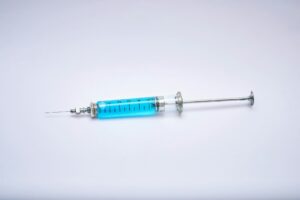
- The Needle and Syringe: Since most peptides are destroyed by stomach acid (the "Peptide Fallacy" we discussed), they must be injected subcutaneously. People are buying insulin syringes and "bacteriostatic water" to reconstitute these powders in their kitchens.
- The Legal Fiction: Both the buyer and the seller are participating in a legal fiction. The seller says, "I’m just selling this to a scientist," and the buyer says, "I’m just doing an experiment," even though the "experiment" is happening in the buyer’s own thigh or abdomen.
- The Danger: Because these aren't regulated as medicine, there is zero oversight on purity. You might be injecting BPC-157, or you might be injecting heavy metals, bacteria, or a completely different synthetic analog.
With medical errors and adverse drug reactions consistently ranking as a top killer in the U.S. (estimated between 250,000 and 400,000 deaths per year), the public trust in "The Pill" is at an all-time low.
The industry needed a word that sounded like "natural biology" but worked like "high-tech medicine." "Peptide" was the perfect candidate.
By calling these substances peptides, the industry can market them as "bio-identical signaling molecules" that simply "remind the body how to heal." It’s a softer, friendlier version of "synthetic drug," designed to appeal to the very people who are running away from traditional pharmaceuticals.
So… Breakthrough or Rebrand?

Is the new 'peptide' just the old 'drug' in a more expensive, less regulated suit?
What are we actually looking at here? Is it a breakthrough in healing, or is it a masterful rebrand by an industry that knows we’ve lost faith in their traditional labels?
It’s likely both. While some people – and again, I have nothing but empathy for those seeking relief from chronic pain – find success in this 'gray market,' we have to acknowledge that we are witnessing a massive land grab.
Pharma is moving in to regulate and 'own' these molecules, while the gray market is using 'research only' labels to bypass safety standards.
In a world where medical intervention is a leading cause of death, we have to ask:
Is the new 'peptide' just the old 'drug' in a more expensive, less regulated suit? A rose by any other name... might still have thorns we haven't discovered yet."
Want Help Navigating the Noise?
If you’re trying to make sense of:
- Supplements
- Wellness trends
- Conflicting health information
I offer live coaching to help you think critically, avoid marketing traps, and focus on what truly supports your health.
I'm not a doctor, so there's no license to take, and I won't be diagnosing, treating, or prescribing. But, I would love to help you with your research, past marketing narratives that are wasting your money, and focus on things that really move the needle in your health.
Check the link out below, and let's talk once a month about your own health journey and my ongoing research to help you.
And make sure to get a copy of my new book Take Daily: How Supplements Hijack Our Health, now available on Audible and Amazon.

 Robyn Openshaw, MSW, is the bestselling author of The Green Smoothies Diet, 12 Steps to Whole Foods, and 2017’s #1 Amazon Bestseller and USA Today Bestseller, Vibe. Learn more about how to make the journey painless, from the nutrient-scarce Standard American Diet, to a whole-foods diet, in her free video masterclass 12 Steps to Whole Foods.
Disclosure: This post may contain affiliate links that help support the GSG mission without costing you extra. I recommend only companies and products that I use myself.
Image Notes
- Photo by Markus Winkler on Unsplash
- Photo by Олег Мороз on Unsplash
- Photo by Vitaly Gariev on Unsplash
Posted in: Health Concerns, Holistic Care, Natural Products, Natural Remedies, Preventive Care, Supplements










I didn't realize people are actually injecting these things. Peptides are basically the same thing as proteins, except that the amino-acid chains are too short to be classified as proteins. Proteins should never be injected. Here's my understanding. The body's immune system president calls a meeting, and shows the others a big picture of this new protein, and says, "Everyone, we have a new invader. Take a good look at this, and then go out and kill and gobble up every one of these;" but it may be only one or two amino acids different from a necessary protein in the body, which gets damaged or destroyed as collateral damage, or the invader attaches to something which also experiences collateral damage—and we've got an autoimmune problem on our hands (which is one of the problems with vaccines). If everything is working right, proteins we eat never get absorbed directly. We have about 24 digestive enzymes, in three categories, with about eight in each category, one being the proteases, which break the proteins (and peptides) down into their individual amino acids, and _that's_ what we absorb, so the body can make the needed proteins out of those amino acids. There are tens of thousands of known proteins in the human body, but they're all made up of the same 20 amino acids, of which about a dozen are essential, meaning we can't make them, but instead need to get them in our diets. (The jury seems to still be out regarding how many are actually essential.) This is also a problem with the collagen market. We don't absorb the collagen directly, but our bodies can make it from the amino-acid building blocks, assuming they're all readily available.
I don’t need to add a new autoimmune problem to my gluten intolerance. So disappointed to learn that peptides and collagen are money wasters.