

Why I Sold My Gold After 20 Years (The Truth No One Tells You)
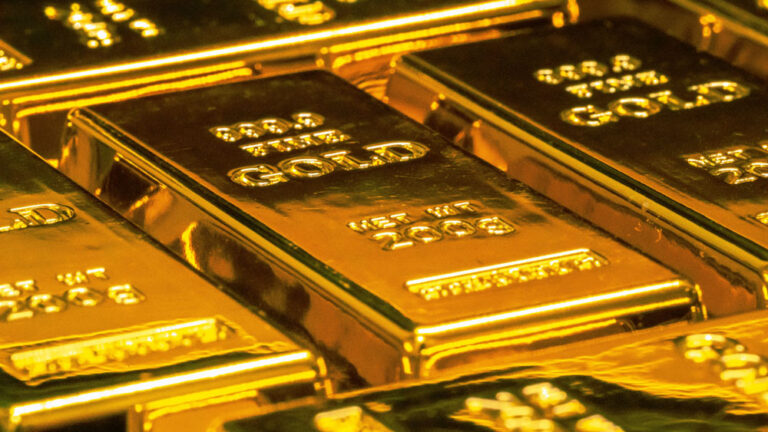
For nearly 20 years, I owned physical gold as a form of financial protection.
I wasn’t speculating or chasing quick gains – I was a single mom, doing what many financially cautious Americans do when they lose trust in the U.S. dollar and the banking system. I studied monetary history, learned how the Federal Reserve operates, and made a long-term decision to store part of my savings outside the traditional financial system.
Year after year, I bought coins and bullion with extra income, believing that if the economy ever became unstable, gold would be a reliable backstop. I assumed that when the time came, selling it would be straightforward.
I was wrong.
About a year ago, I decided to liquidate my metals – not during a financial collapse, but during a relatively stable period. What followed was a difficult, stressful, and eye-opening process that revealed realities of gold ownership I had never heard discussed openly, even after decades of following gold advocates and dealers.
This article isn’t about telling you not to own gold. It’s about sharing what I learned the hard way – what it actually looks like to sell physical gold, the risks most people don’t consider, and why “owning” something isn’t the same as being able to use it when you need it most.
If you prefer, you can watch or listen to this article.
1. The "Expectation vs. Reality" Gap

The reality: Selling gold is not easy!
Most people who buy gold have a simple vision of how the future will work.
They think: I buy gold for $2,000. The price goes up to $5,000. I walk into a shop, hand them the gold, and walk out with a suitcase of cash.
That is not how it works. Not whatsoever.
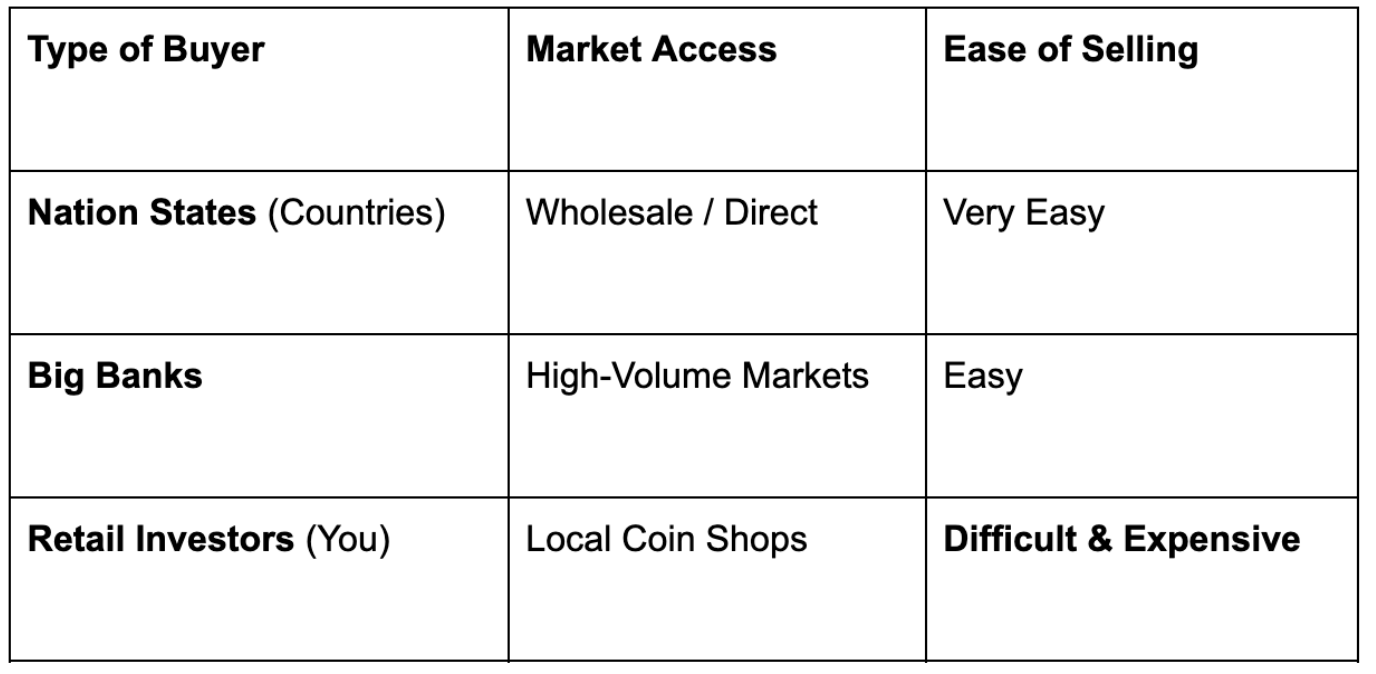
When I decided to liquidate (sell) my gold about a year ago, the economy was doing okay – it wasn't even a "doomsday" scenario. Even so, I had to call seven different dealers before I found one who would help me.
Why did the other six say no? I’ll share four reasons:
- No Cash: Some didn't have enough actual money in the bank to buy a large amount of gold at once.
- Bad Inventory: Some already had too much gold and didn't want more. My gold bullion dealer friends tell me that since the economy headed downhill, hard, after 2022, the public became net sellers, not net buyers. This was before gold ran up to $5,000. Sadly, the higher the price is, with Bitcoin and with gold too, the more people want to buy it!
- Pickiness: Some would only buy very specific types of coins they knew they could sell quickly.
- Distance: Some were so far away that I would have had to drive for hours with a fortune in my trunk, which is very dangerous.
2. The "Hidden Exit Tax" (The Spread)
But let’s talk about the one and only dealer we called, who did buy my gold and some of my silver. In the world of investing, there is something called the bid-ask spread. Think of this as a hidden fee.
When you buy gold, you pay the Retail Price (the highest price). When you sell it back, the dealer pays you the Wholesale Price (the lowest price). This gap is how the dealer makes a profit. On gold, this "spread" can be 10% or even 20%.
If you bought $10,000 worth of gold and your car broke down the next day, and you needed the cash back, you might get only $8,500 for it. You start "in the hole" the moment you buy it.
If you are looking for ways to grow your money without losing 10% on day one, you might want to look into our Bitcoin Insiders Class. (Get a free class to check it out here.)
3. Don’t Walk Around the Back!
When I finally found a dealer who would buy my metal, the experience felt like a spy movie – and not a fun one. I pulled up to the shop, and because the boxes were heavy, I walked toward the back door.
My husband stopped me and said, "That’s a bad idea." When I got inside, the employees were even more stressed. They told me, "That was a really bad idea!"
Gold shops are high-target areas for crime. The doors are usually locked, and the windows are bulletproof. Once I was inside, I couldn't just leave. Even though their dealership was next door to a police station.
They spent the entire day testing every single gram of gold and silver to make sure I wasn't a scammer. They used acids, scales, and electronic scanners. It was an exhausting, all-day process just to get my own money back.
And I realized that I’d had to take sellers’ word for the products’ legitimacy, when I’d bought the gold and silver over the years. But I spend a full-time day with the dealer testing what I owned.
I’m glad I don’t live in a banana republic only to find what I was stashing in a now-empty safe wasn’t real gold and silver.
You gold and silver owners will be glad to know that despite buying at a variety of bullion dealers, all my inventory tested to be pure.
4. The Burden of "Physical" Wealth
A safe is basically a giant sign that says, "The most valuable stuff is right here!"
For 20 years, I hauled a heavy iron safe to seven different houses as I moved across the country. Every time I went on vacation, I had a tiny knot of anxiety in my stomach. What if someone breaks in? What if they find the safe?
A safe is basically a giant sign that says, "The most valuable stuff is right here!"
Unlike money in a modern digital system or the equity in your home, physical gold can be taken by anyone with a crowbar and a truck. This is a level of stress that many "gold influencers" on YouTube don't talk about, because those YouTube channels are hosted by bullion dealers, and their entire point is to sell you gold!
I even have a comical scene from 2020, where John and I moved to Florida, on an airplane, and we paid a guy to pull our 5th wheel, driving our truck, across the country.
We’d loaded the 5th wheel with all the stuff we moved with. And when the truck got to Florida (thank God it got there – if they’d been in an accident, this would have been even more stressful), John and I frantically got into the 5th wheel and went to the spot where the gold and silver were under a blanket to check it, and we felt massive relief.
We then had 3 guys help John locate the safe inside, and when everyone was gone, on moving day, we put that gold into the safe. I am happy to report that there is nothing in that safe anymore, and I no longer feel anxiety about going on vacation.
I’ve heard other stories like mine regarding the weeks it takes, for gold and silver a retail investor orders, to leave the bullion dealers, and finally end up in the customer’s possession a few weeks later, that involves 4 different stages, all of which add to the cost you pay for the gold and silver, and cause a very stressful experience.
If you want to learn how to protect your net worth without needing a 500-pound safe, check out our Bitcoin Insiders. I’m offering you a free class to see if you want to learn more. I’ve been teaching Bitcoin classes every Wednesday for 5 years.
Our students stay an average of a year and a half and report that the classes are life-changing and increase their security and knowledge to feel grounded in an increasingly unpredictable world.
5. Why Gold Isn't "Money"
People often say gold is the "ultimate money." But in a real crisis, gold has three major flaws:
- The Grocery Store Test: You cannot buy bread with a gold bar. The cashier won't know how to verify it, and they certainly won't have the "change" to give you back in smaller coins.
- The Security Risk: Carrying gold to a store makes you a target for robbery.
- The Dealer Collapse: If the economy really crashes, the local gold dealer will be the first person to run out of cash. If they can't give you paper money for your gold, the gold is just a heavy rock until the crisis is over.
Florida passed a law a couple of years ago, making gold “legal tender.” And yet here we are, with absolutely no store I’ve ever seen, taking gold and give you cash (or anything else) as change.
We haven’t in 5,000 years somehow moved toward taking gold as payment. I do have a Glint card with gold held in reserves, that I put $10,000 on several years ago. So my buying power has doubled, since I put gold on that card. I use it once in a while, just to make sure it’s still working. However, if I add to my reserves, now I’m also paying for $5,000 gold.
I certainly don’t have that gold in my own custody. I still have to take a third party’s word for it.
6. The Ethical and Political Side
Finally, gold has a "dirty" history. Much of the gold mined today involves child labor and forced labor in dangerous conditions or chemicals that destroy local water supplies.
Furthermore, the government has the power to make gold illegal. From 1933 to 1974, it was actually a crime for Americans to own gold except for a few collector coins, and it was punishable by fine or jail time to use it as money or be caught owning it.
The government only "allowed" us to have it back, 41 years later, once the dollar was no longer tied to gold. This shows that gold is only "legal" as long as it doesn't bother the people in power.
Conclusion: Eyes Wide Open
I am not saying you should never own gold. It can be a part of a backup plan. After many years in the doldrums, both gold and silver holders are happy with the run-up in prices in 2025, and into 2026.
Which is driven by central banks buying it, as they realize how fragile their banking and fiat currency systems are.
My favorite small-business, high-integrity gold dealer is John Fisher, 800-390-8576, info@fisherpm.com. He’s been in the business for decades, and tell him my name and you’re get the most fantastic service and prices.
But I want you to have the full picture. It is easy to buy, but it is hard, dangerous, and expensive to sell. Make sure your "safety net" isn’t actually a trap when you actually need to use it.
If you want to buy gold, my favorite of all the dealers I ever dealt with is a small-business, high-integrity gold dealer, John Fisher, 800-390-8576, info@fisherpm.com. He’s been in the business for decades. Tell him my name, and you'll get the most fantastic service and prices.
Learn about Bitcoin, because public companies, pension plans, nation states and banks are starting to pile in – and you’re still early.
Come to Bitcoin Insiders because you have to understand the asset you own, or you’ll just sell it when it goes up 50%. If you don’t have more understanding and conviction. And then, well, you’ll be right back in the failing dollar.
 Robyn Openshaw, MSW, is the bestselling author of The Green Smoothies Diet, 12 Steps to Whole Foods, and 2017’s #1 Amazon Bestseller and USA Today Bestseller, Vibe. Learn more about how to make the journey painless, from the nutrient-scarce Standard American Diet, to a whole-foods diet, in her free video masterclass 12 Steps to Whole Foods.
Disclosure: This post may contain affiliate links that help support the GSG mission without costing you extra. I recommend only companies and products that I use myself.

Posted in: Lifestyle












No comments found, but you can be our first!