
Why Cancer Treatment Feels Like a Conveyor Belt — and How to Take Back Control
This is a heavy but very important topic. Right now, I am watching nearly half a dozen close friends and loved ones go through what I call the "cancer gauntlet."
I wanted to share my observations, given that half of us face this diagnosis, in the modern world – and more than that, for men.
When you enter the world of cancer treatment (oncology), you quickly realize you aren't just a passenger. You are on a high-speed conveyor belt.
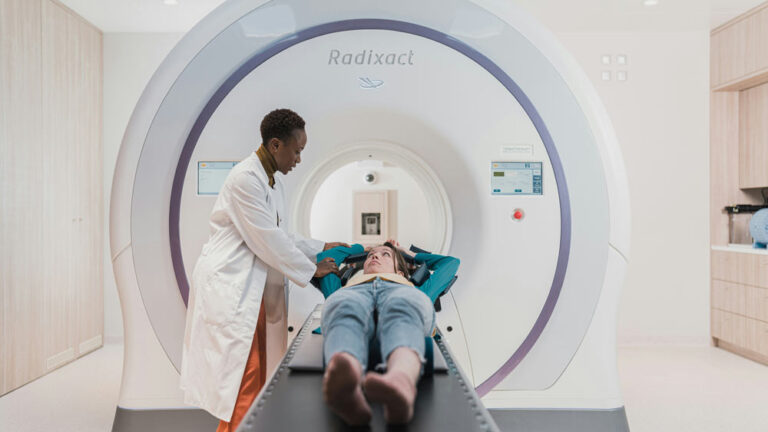
You might get only ten minutes with a doctor who seems too busy for hard questions. Their main goal? Getting you scheduled for a long list of drugs as fast as humanly possible. Radiation isn’t just a radioactive beam anymore – it might be in a syringe or IV.
So it’s not just chemo and radiation that oncology offices deliver – there is a dizzying array of drugs, then drugs to cover the side effects of drugs, and more drugs as a third layer masking even more symptoms.
Oncology now calls many of its expensive drugs “immunotherapy,” which is a euphemistic term. They’re just not going to prescribe you something if it doesn’t fit in the model of patented pharma that creates a $500K paycheck for an oncologist, and lots more for the clinic or hospital, the insurance company, and the pharmaceutical company.
To watch or listen to this blog post instead, click here.

Cancer Treatment “Conveyor Belt”: 4 Hidden Problems
After watching my friends and family go through this in 2025, I’ve noticed four specific things that really worry me.
Here is what you need to know: just four observations in my constant quest to educate you “past the marketing” about a variety of topics related to your health.
1 — The "Bundling" Trap: Why All-or-Nothing is Wrong
I have seen doctors tell patients they won't give them one life-saving drug unless the patient agrees to take five or six other drugs at the same time.
When patients ask to skip the extra drugs, doctors often blame insurance. They say, "Insurance won't pay for drug A unless you also take B, C, and D." If I were the patient, I’d call this out, research it myself, or stick to my guns about the one I want and the others I don’t. This is a pressure tactic designed to make you feel like you have no choice.
If a medicine is effective, it should stand on its own merit. It shouldn’t be "held hostage" by a bundle of other prescriptions just to satisfy an office revenue goal. This is the opposite of "personalized medicine," which is supposed to be about you, not a package deal.
2 — The "IV Markup": Following the Money

Mosy IV drugs are a business model sold as a medical necessity.
Have you noticed that almost every drug is now given through an IV (a needle in the arm) or injection? It’s not just chemo. It’s also drugs for bone density, radiation isotopes, and various "support" treatments.
There is simple math behind this shift. If a doctor gives you a pill to take at home, the clinic doesn't make much money. But if you are sitting in a clinic chair while a nurse watches an IV drip or has to administer the drug, the clinic can bill for:
- The nurse's time.
- The "chair time."
- A massive markup on the cost of the drug itself. (According to my research, the average round of chemotherapy represents $7K to $10K of markup, for the doctor in private practice and his clinic.)
While some drugs must be IV, the financial incentive for the clinic to keep those chairs full is huge. It’s a business model sold as a medical necessity.
3 — The "Standard of Care" Brush-off
When you ask hard questions, like, "What are the long-term success rates?", doctors often get defensive. Their go-to answer is: "This is just the Standard of Care."
This phrase is a conversation killer. It’s meant to make you feel like any other choice is crazy. But "standard" often just means "the recipe everyone follows so they don't get sued."
The practice of medicine has been codified to be basically a “paint by numbers” system. It removes the "art" of medicine, in the name of protecting doctors from lawsuits and making matching up treatments to diagnoses easy and clear, for insurance companies and doctors.
It ignores your nutrition, your unique body, and your personal goals. When you hear this, what they are really saying is: "Stop asking questions and stay on the conveyor belt."
4 — The "Drug for the Drug" Cycle
In 2025, I am shocked by the sheer volume of "accessory" drugs.
It creates a cascading waterfall of chemicals:
- Drug 1: Targets the cancer (or not, some of the cancer patients I know were told the primary drug won’t lengthen their life–but they’re told some other possible benefit).
- Drug 2: Manages the side effects of Drug 1.
- Drug 3: Protects your kidneys from Drug 2.
- Drug 4: Helps you sleep because Drug 1 makes you shaky.
- Drug 5: Stops the pain.
- Drug 6: Stops the nausea caused by the pain drug.
- Drug 7: Forces gastrointestinal motility when your digestive system stops working.
Before you know it, your body is a chemistry experiment. Many people I love are perhaps as exhausted by the "support" drugs as the actual cancer treatment.
Taking Your Health Back Into Your Own Hands

If you feel overwhelmed by the modern medical system, you don't have to do it alone.
I decided years ago that if I ever faced a cancer diagnosis, I would be a "difficult" patient. I would be polite as pie, but I would refuse to hear "death hexes" – those percentages and scary predictions doctors give.
I want the diagnosis, and then I want to go do my own research, start a rigorous detox, and support my immune system, and take my chances with the cancer. That is not for everyone. It’s just what I already know I’d choose.
If you feel overwhelmed by the modern medical system, you don't have to do it alone. While I am not a doctor and I don't tell people which medical protocols to use – no diagnosis or treatment of illness which is outside my scope – I do offer Insiders Health Coaching. This is a small-group setting where we cut through the marketing noise together.
When you join, you get immediate access to these courses I did with some amazing functional medicine doctor friends of mine:
- A mini-course featuring interviews with functional medicine doctors.
- Natural hormone treatment deep-dives.
- Research on cancer and breast imaging options.
- Guides on biological dentistry.
- Strategies to reduce EMF and chaotic frequencies in your home.
Join Our Community
The system is a gauntlet – it’s narrow, fast, and intimidating. But it’s your body. You are the one who has to live with the results long after the IV is unplugged.
- Insiders Health Coaching: I’d love to talk with you on our monthly calls! Click here for a FREE month and use coupon code COACH for an extra $50 off.
- New Book: Take Daily: My new book about the supplement industry is out now on Audible and Amazon. My co-author Mike Fairclough and I share the truth about what is really inside your supplements, and how they’re manufactured. The launch special and free video gifts are still available!
Read Next: Open Letter To A Cancer Patient
 Robyn Openshaw, MSW, is the bestselling author of The Green Smoothies Diet, 12 Steps to Whole Foods, and 2017’s #1 Amazon Bestseller and USA Today Bestseller, Vibe. Learn more about how to make the journey painless, from the nutrient-scarce Standard American Diet, to a whole-foods diet, in her free video masterclass 12 Steps to Whole Foods.
Disclosure: This post may contain affiliate links that help support the GSG mission without costing you extra. I recommend only companies and products that I use myself.
Posted in: Health Concerns, Holistic Care











No comments found, but you can be our first!