

The Secret Marriage of Big Pharma and Big Supplement
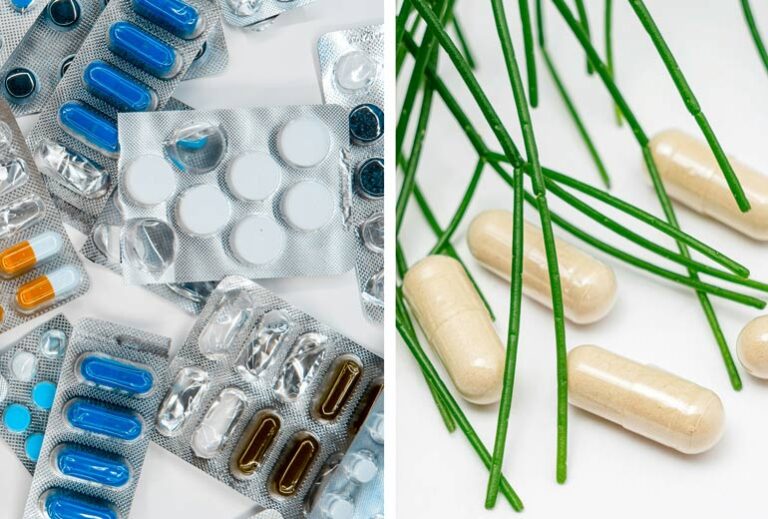
The Fairy Tale of “Natural” Health: Who Really Owns the Supplement Industry?
You’ve seen the shelves – bottles with labels showing leaves, sunshine, and promises.
“Natural,” “pure,” “plant-based.” It’s comforting to believe our daily vitamins are made from food.
But are supplements safe? Behind that greenwashed glow, many of those “natural” pills come from the same giants making chemotherapy drugs and pesticides. And I hate to tell you, no food was involved, and taking them doesn’t in any way compensate for a healthy diet.
Centrum? Born at Pfizer.
One A Day? Made by Bayer – yes, that Bayer, the Roundup company.
Nature Made? Owned by Otsuka, a global pharmaceutical conglomerate.
Big Pharma doesn’t just sell drugs. It sells “wellness.” And it’s laughing all the way to the bank.
Here's what you'll learn in this article:
- Where synthetic vitamins actually come from
- Why supplements aren't regulated like drugs
- How marketing keeps us asleep
- What to ask before buying supplements again
- Ready to learn the whole story to protect your health – and your wallet?
Where Synthetic Vitamins Actually Come From

The truth is, Big Pharma owns supplements.
What’s in my vitamins?
Your “vitamins” weren’t dreamed up by a kind herbalist in a cottage – they were formulated in a lab.
The first multivitamin, “Metagen,” launched in 1920 from Parke-Davis, a pharma company later absorbed by Pfizer. Bayer’s One A Day followed in 1943.
That’s when a culture of “health through pills” took root. And we’ve been swallowing the story ever since.
Maybe you never even examined it – till I started blogging several years ago, and recently wrote Take Daily: How Supplements Hijack Our Health.
Today, the global supplement industry is worth hundreds of billions of dollars, much of it flowing straight back to pharmaceutical balance sheets. The truth is, Big Pharma owns supplements.
Yet, not all of modern supplements are made of synthetic or industrial byproduct ingredients. Only about 98% of it!
When the Fox Guards the Hen House: Why Supplements Aren’t Regulated Like Drugs
Unlike drugs, supplements don’t need FDA safety testing. They’re legally classified as food, not medicine.
(Bizarrely, even though no food was involved in the vast majority of it.) Translation: no proof they work. No evidence they’re safe. No testing before they hit the shelves.
And when companies get caught? The fines are tiny, compared to profits, so they take the hit, adjust, and carry on:
- Bayer paid $3.3M for false cancer-prevention claims.
- Airborne paid $23M for fake “immune-boosting” promises.
- Roche paid $500M for fixing vitamin prices worldwide.
They call it a “wellness industry.” I call it a chemical convenience store.
How Marketing Keeps Us Asleep
The marketing is hypnotic. Glossy images, influencer endorsements, and words like bioavailable, active form, and clinically backed.
Meanwhile, the ingredients are often byproducts of coal tar, acetone, or sheep-wool grease. Yes, really.
Also, limestone pulled out of ore-mining sites. The inside of mollusk shells. Chalk. Throwaway byproducts of the dairy industry – or even unmentionables, such as human waste products.
Labels use impressive words like pyridoxine, cyanocobalamin, and cholecalciferol – synthetic names for compounds created in industrial vats – not found in oranges, salmon, or sunlight.
We’ve been Snow White: trusting, hopeful, deeply sleeping.
The Wake-Up Questions: What to Ask Before Buying Again

Before you buy another “clean” multivitamin, ask the seller or practitioner:
- Have you visited the facility where this supplement is made?
- What base materials were used to make it?
- What solvents or acids were part of the manufacturing process?
If they can’t answer clearly – or get defensive (there’s a nearly 100% chance whoever you might be buying from will do one of those two things, or make something up that isn’t true!) – you’ve just learned something more valuable than any capsule could offer.
That was part of my research, the several years before writing Take Daily. I talked to many, many functional medicine practitioners, influencers, and even CEO’s of billion-dollar supplement companies.
Finding that not one of them knew what the product they were selling even was.
The Awakening
The truth: Big Pharma and Big Supplement are not rivals. They’re partners.
One sells you the disease; the other sells you the “cure.”
Both profit from your belief that health comes in a pill. One requires a prescription; the other you can buy from various sources (many of whom tweak the label to look “proprietary”).
Real health doesn’t come from any pill. It comes from food that grows, water that flows, sleep that restores, and movement that strengthens.
When you stop believing the fairy tale, you start writing your own story.
A New Kind of Informed Consent
If you wouldn’t drizzle WD-40 on your salad or snack on sawdust, why swallow capsules made from petrochemical solvents and cellulose wood pulp?
It’s not about fear – it’s about truth. You have the right to know what’s in your body and who profits from it.
Look at the label.
Ask the questions.
Follow the money.
The apple’s shine is fading. The spell is breaking. And the truth is finally surfacing.
Ready to Learn the Whole Story?
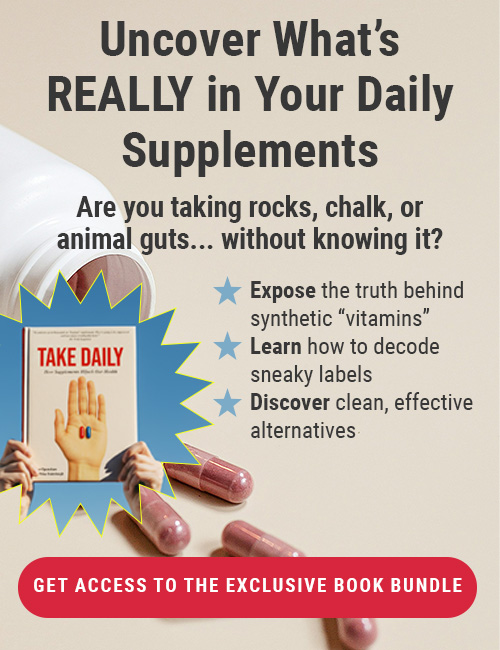
This post is adapted from Take Daily: How Supplements Hijack Your Health by Robyn Openshaw and Mike Fairclough – a deep dive into how marketing, money, and petrochemicals reshaped the wellness world.
Discover what’s really in your supplements. Get your copy now!
 Robyn Openshaw, MSW, is the bestselling author of The Green Smoothies Diet, 12 Steps to Whole Foods, and 2017’s #1 Amazon Bestseller and USA Today Bestseller, Vibe. Learn more about how to make the journey painless, from the nutrient-scarce Standard American Diet, to a whole-foods diet, in her free video masterclass 12 Steps to Whole Foods.
Disclosure: This post may contain affiliate links that help support the GSG mission without costing you extra. I recommend only companies and products that I use myself.
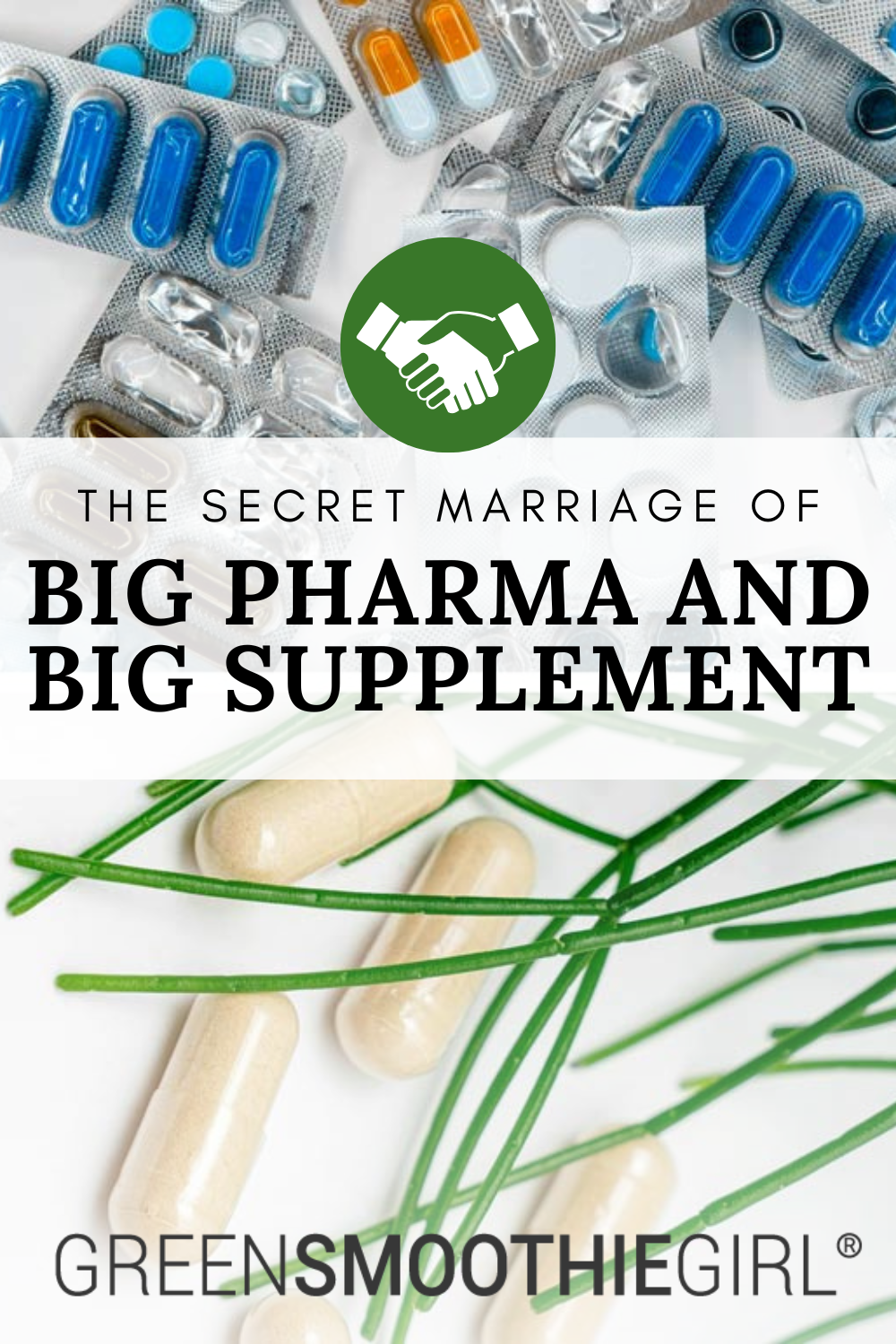
Image Notes
- Vitamins/supplements image used under a Creative Commons Attribution-ShareAlike 3.0 license by Nick Youngson.
Posted in: Natural Products, Supplements









No comments found, but you can be our first!